
Besrey -Oct. 30 2026
How to Choose a Scooter for Kids: 6 Safety Features Parents Should Check

Choosing your child's first scooter is exciting, but with so many options available, how do you know which one is right?
From three-wheel designs and adjustable handlebars to brakes and light-up wheels, every feature promises something different. For parents, however, the most important considerations are safety, stability, ease of control, and comfort.
A good first scooter should suit your child's size and abilities while making learning to ride enjoyable. Here are six essential features to check before buying.
1. Choose the Right Scooter Size and Handlebar Height
Before comparing colors or special features, start with the fit.
A scooter that's too large may be difficult for a child to control, while one that's too small can create an uncomfortable riding position.
When checking the fit, look for:
▪Handlebar height: Your child should be able to hold the grips comfortably with a slight bend in the elbows.
▪Foot space: The deck should provide enough room for secure foot placement.
▪Weight capacity: Check the manufacturer's maximum rider weight.
▪Adjustability: A height-adjustable handlebar offers flexibility as your
Remember that age recommendations are only a starting point. Two children of the same age may have different heights, experience levels, and riding abilities.
Parent tip: Have your child stand on the scooter with both hands on the handlebars before deciding whether the size feels appropriate.
2. Look for Stable Wheels and a Comfortable Deck
For many beginners, a 3-wheel scooter for kids can be a practical first choice.
Its three-point wheel arrangement provides a wider support base than a typical two-wheel design, which may help young riders feel steadier while learning.
However, wheel count alone doesn't guarantee stability.
Parents should also consider wheel material, deck width, grip, and the surfaces where the scooter will be used.
PU wheels are common on children's scooters and are generally suited to smooth, hard riding surfaces. Wider wheels may offer a more reassuring feel, but actual ride comfort depends on the complete design and ground conditions.
Choose smooth, dry, obstacle-free areas for early practice. Avoid loose gravel, steep slopes, wet pavement, and roads with traffic.
3. Choose Steering That's Easy for Kids to Control
A child's first scooter should respond in a way they can learn and predict.
One common option is lean-to-steer technology, which allows children to guide the scooter by shifting their weight rather than turning the handlebar like a bicycle.
This can make steering feel intuitive once a child understands the movement.
When evaluating a scooter, ask:
▪Can the child make gentle turns without struggling?
▪Does the scooter respond predictably at low speeds?
▪Can the child maintain a comfortable grip while steering?
A secure, non-slip handlebar grip is also important, especially for smaller hands.
Parent tip: Start with short, gentle turns in an open area. Encourage children to practice controlling their direction before increasing speed.
Remember that a stable design reduces neither the need for supervision nor the possibility of tipping.
4. Check the Rear Brake Before the First Ride
Knowing how to stop is just as important as knowing how to move.
Many children's kick scooters feature a foot-operated rear brake. By pressing the brake with one foot, the rider can slow the scooter down.
Before purchasing, check whether the brake is accessible and easy for your child to operate.
A reliable braking experience depends on several factors:
▪The child's ability to reach and press the brake.
▪The responsiveness of the braking mechanism.
▪The scooter's speed and riding surface.
▪The child's familiarity with stopping.
Have your child practice braking at walking speed before attempting longer rides.
Parent tip: Teach children to slow down early rather than waiting until they are close to an obstacle.
5. Consider Durability, Weight Capacity, and Portability
A kids' scooter needs to handle regular use, but it should also be convenient for the adults who carry and store it.
Look at the frame construction, folding mechanism, overall weight, and recommended rider capacity.
A strong weight capacity can provide flexibility for growing children, but parents should never exceed the manufacturer's stated riding limit.
Portability also matters. A foldable scooter is easier to bring along on family outings, fit into a car, or store at home.
Before buying, ask yourself one simple question:
Will this scooter be easy enough to bring along on an ordinary trip to the park?
If the answer is yes, your family may be more likely to use it regularly.
6. Choose Features That Make Kids Excited to Ride
Practical features matter, but a first scooter should also feel exciting to the child.
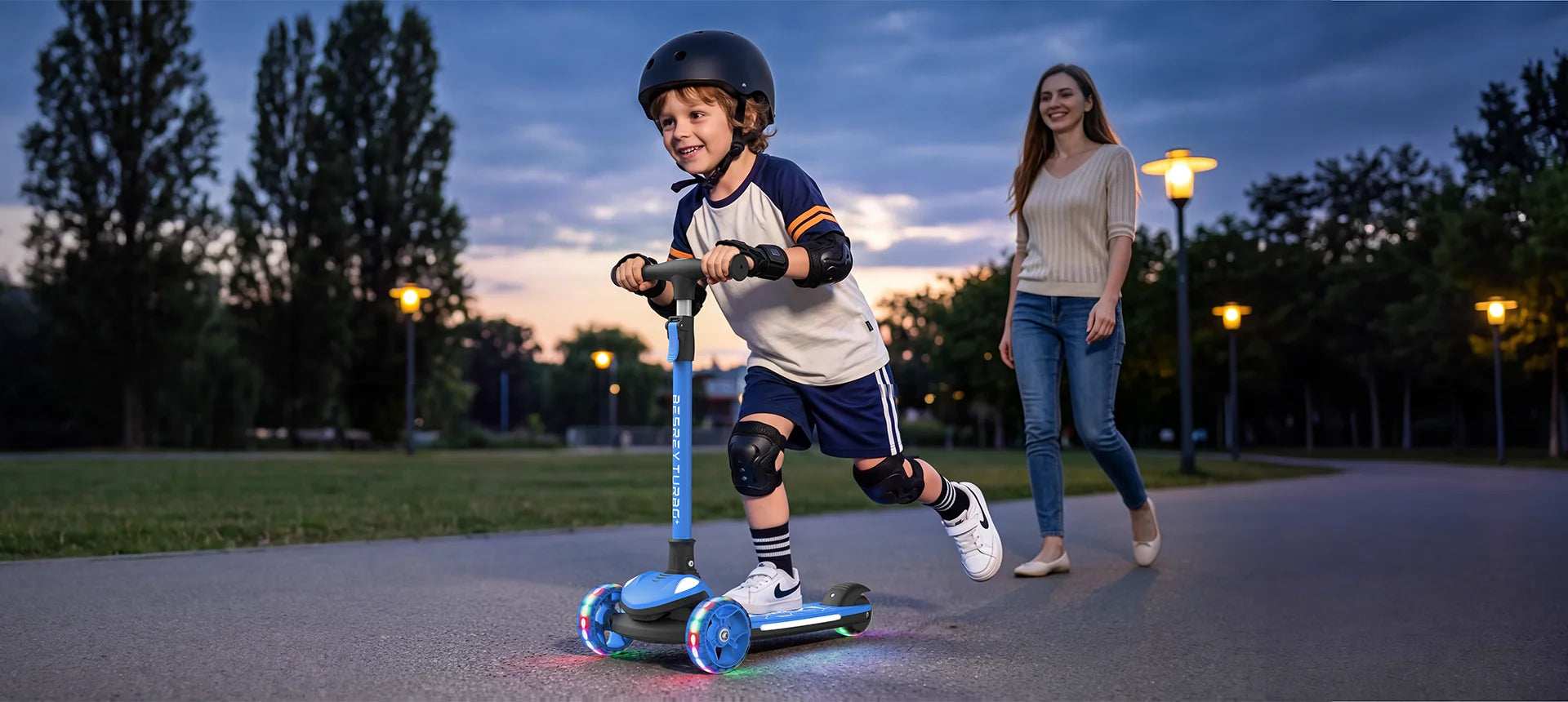
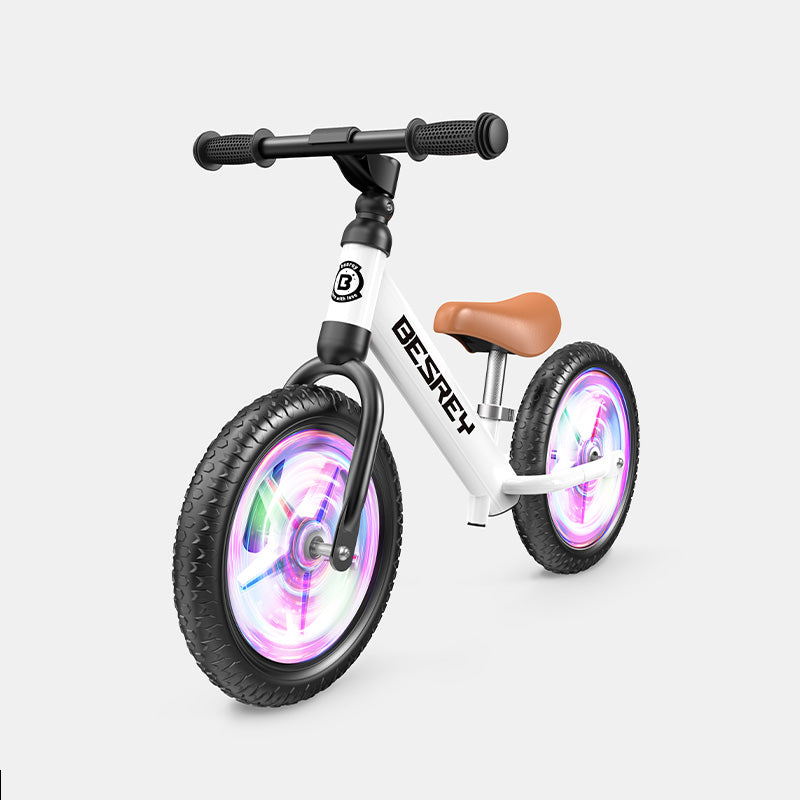
Bright colors, playful designs, and light-up wheels can make riding more engaging and encourage children to choose active outdoor play.
For example, motion-powered lights illuminate as the scooter moves, creating a visual effect without requiring a separate battery for the lighting system.
For parents, that means one less charging task. For children, it adds a playful touch to each ride.
Still, appearance should complement safety and usability, not replace them.
Choose a scooter that combines an appealing design with suitable steering, braking, and riding comfort.
A Closer Look at the Besrey 3 Wheel Battery-Free Light-up Scooter
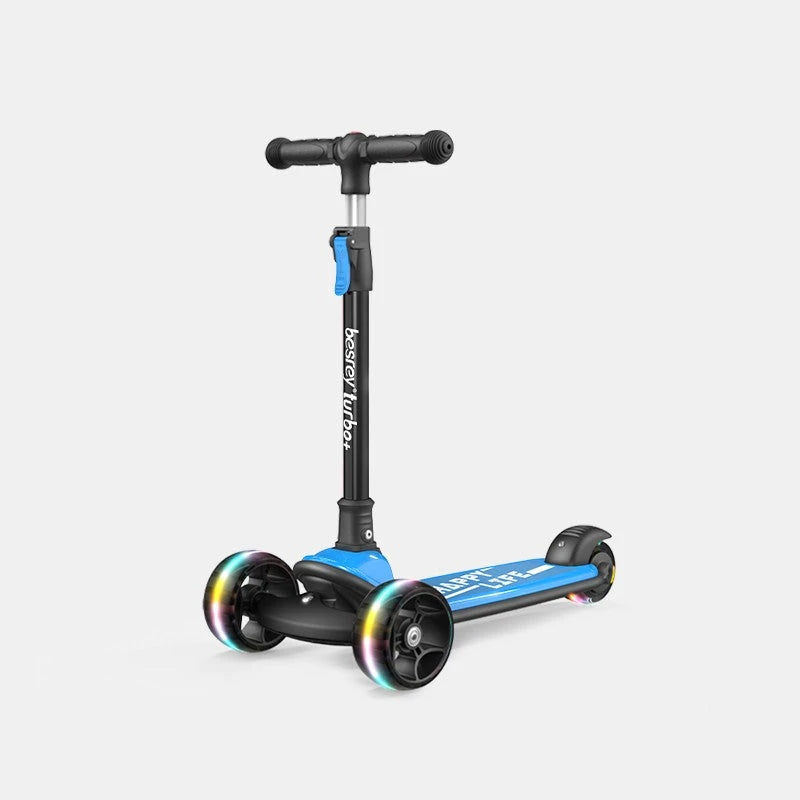
For families looking for a balance of dependable design and enjoyable handling, the Besrey 3 Wheel Battery-Free Light-up Scooter brings these important features together.
Designed for children ages 3–10, the BR-KSK01 combines a stable three-wheel stance with lean-to-steer handling, non-slip grips, a responsive rear brake, and wide PU wheels.
Its four-position adjustable handlebar accommodates different heights, helping parents find a more comfortable fit as their child grows.
The scooter supports riders weighing up to 110 pounds (50 kg) and weighs approximately 6.2 pounds, making it relatively easy to carry and store.
What makes the design especially playful is its biomimetic appearance. The wheels, front “eyes,” and deck illuminate through movement, creating an engaging riding experience without a separate lighting battery.
The foldable frame adds convenience for everyday family outings.
Rather than focusing on individual specifications alone, Besrey brings together stability-oriented design, responsive handling, and playful interaction to help young riders enjoy movement with greater confidence.
First Scooter Safety Checklist for Parents
Even a well-designed scooter requires the right riding habits.
Before each ride:
▪Check the frame, wheels, grips, and brake for damage or looseness.
▪Confirm that the handlebar is securely adjusted.
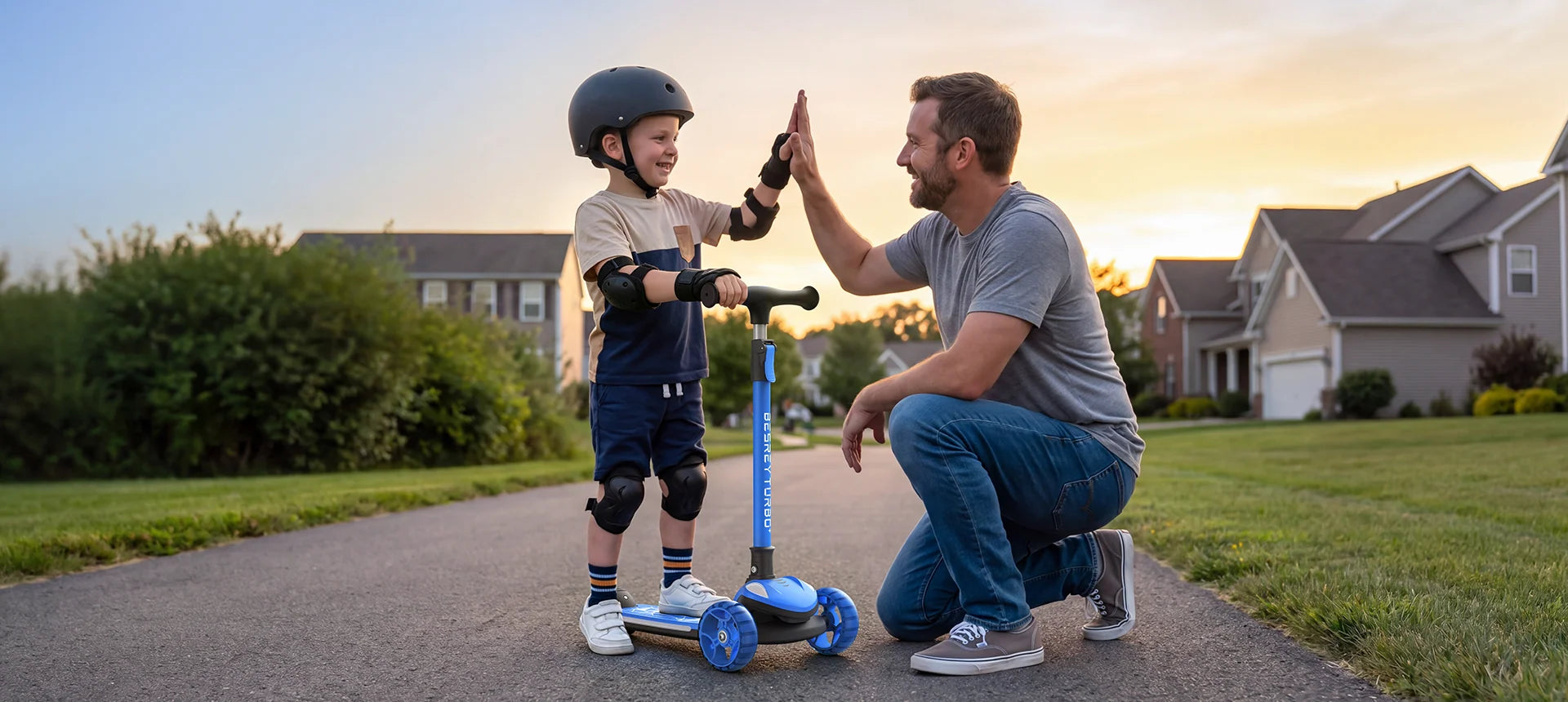
▪Make sure your child wears a properly fitted helmet and appropriate protective gear.
▪Choose a smooth, traffic-free riding area.
▪Supervise beginners and practice stopping and turning at low speeds.
Always follow the product's official instructions and age and weight recommendations.
Frequently Asked Questions
Is a 3-wheel or 2-wheel scooter better for beginners?
A three-wheel scooter is often a practical starting point for younger beginners because its wider support arrangement may help them feel more stable. Two-wheel scooters generally require more active balance. The best choice depends on the child's size, coordination, and riding experience.
What age should a child get their first scooter?
There is no single perfect age. Check the manufacturer's age recommendation and consider your child's physical readiness, ability to follow instructions, and comfort with basic movement. For reference, the Besrey BR-KSK01 is specified for ages 3–10.
How high should a kids' scooter handlebar be?
The handlebar should allow the child to stand comfortably, with relaxed shoulders and slightly bent elbows. Avoid a position that requires excessive reaching or hunching.
Are light-up scooter wheels battery-powered?
It depends on the model. Some scooters use motion-activated lighting that requires no separate battery, while others have battery-powered lights. Check the manufacturer's product specifications.
Final Thoughts: Choose Confidence, Control, and Everyday Fun
The best first scooter isn't necessarily the one with the most features. It's the one that fits your child's needs and supports a comfortable, manageable riding experience.
Start with the essentials: proper fit, stable wheels, intuitive steering, accessible brakes, durable construction, and an engaging design.
When these details work together, a first scooter can become more than a new toy—it can help children enjoy movement, practice new skills, and look forward to their next outdoor adventure.
Explore Besrey kids' scooters to find an option that suits your family's everyday adventures.