
Besrey - Apr 28 2026
When Do Kids Actually Need Brakes on a Balance Bike?

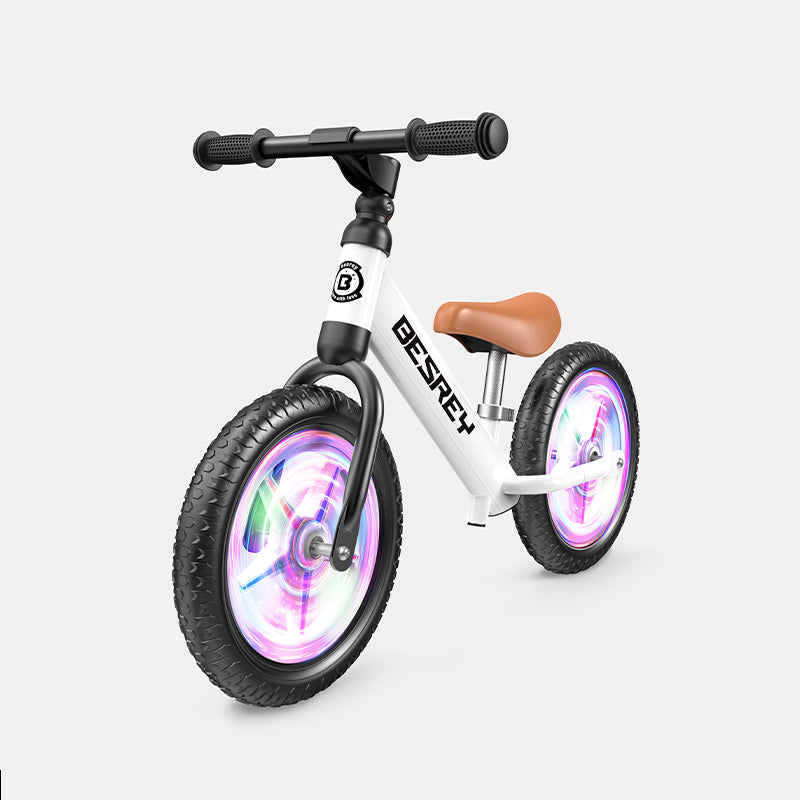
Balance bikes have become one of the most popular ways to help young children develop coordination, confidence, and riding skills before transitioning to a pedal bike. Yet one question comes up repeatedly among parents: do balance bikes need brakes?
The answer depends on your child's age, experience, and where they ride. While some models are intentionally designed as a balance bike without brakes, others include a hand brake to support older or more confident riders. Understanding when brakes become useful can help you choose a bike that matches your child's developmental stage.
Why Some Balance Bikes Have Brakes and Others Don’t
Balance bikes come in a variety of designs, some equipped with brakes and others without. The inclusion of brakes often depends on the age and experience level of the rider.
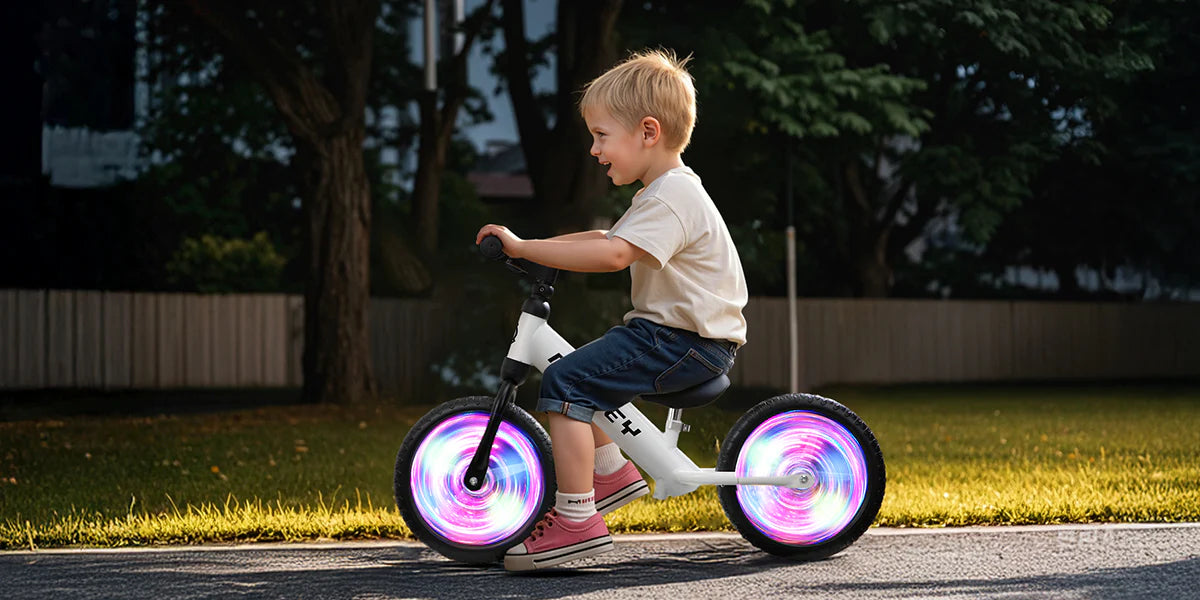
● Balance Bikes without Brakes: Many balance bikes for younger toddlers (typically ages 18 months to 3 years) do not include brakes. This is because younger children are still mastering basic balance and coordination skills. For these riders, braking isn’t usually necessary, as they typically stop by using their feet to touch the ground. A brake would be an added complexity that could distract from their focus on balance.
● Balance Bikes with Brakes: As children grow older and develop more advanced motor skills, adding brakes can be beneficial. Brakes are especially helpful for kids who are starting to ride on slightly more challenging terrains or are using their balance bike at higher speeds. For children aged 3 and up, especially those who already have good control over balance and coordination, a brake allows them to practice stopping in a controlled and safe manner.
Are Brakes Necessary for Toddlers?
For most toddlers under age three, the answer is usually no.
At this stage, children are still mastering fundamental gross motor skills such as running, stopping, and balancing on one foot. A balance bike's primary purpose is to strengthen these exact abilities.
Young toddlers naturally use their feet as "training brakes." This allows them to control speed in a way that feels safe and familiar.
The American Academy of Pediatrics emphasizes that riding toys should match a child's developmental abilities, not simply their age. A toddler who is just learning to glide benefits far more from a lightweight frame and proper fit than from a brake lever they may not yet understand.
A balance bike without brakes is often the simplest and safest choice for beginners riding on flat, predictable surfaces.
When Do Kids Actually Benefit From Brakes?
As children become faster and more adventurous, brakes begin to offer meaningful advantages.Most children start benefiting from a balance bike with brakes between ages three and five. By this stage, many can:
● Glide for extended distances
● Steer confidently through turns
● Ride down gentle slopes
● Understand cause and effect
● Squeeze a hand lever reliably
Learning to use a hand brake before transitioning to a pedal bike can also make that later step easier. Since standard bicycles rely on hand brakes, early familiarity can smooth the learning curve.
A study published in the Journal of Motor Learning and Development found that progressive skill acquisition—learning one riding component at a time—supports greater confidence and faster mastery in young children.
In practical terms, brakes become particularly useful once a child can consistently ride faster than they can comfortably stop with their feet alone.
Does Terrain or Riding Style Matter?
Absolutely.Where your child rides plays a major role in whether brakes are necessary.
1. Flat Sidewalks and Indoor Spaces
For smooth, level surfaces, foot braking is usually sufficient. Younger riders rarely need more stopping power than their own feet can provide.
2. Parks and Gentle Hills
As slopes increase, speed builds quickly. A hand brake offers better control, especially on longer descents where dragging feet can become less effective.
3. Gravel, Dirt, and Uneven Ground
Variable terrain introduces unexpected challenges. A brake helps children slow down safely when traction changes.
The Consumer Product Safety Commission recommends that ride-on toys be used only on surfaces appropriate for the child's skill level. Even the best brake cannot compensate for unsafe terrain or inadequate supervision.
The Best Balance Bike Setup by Age and Skill Level
Ages 18 Months to 2.5 Years
At this stage, lightweight design matters most.
Look for:
● Low seat height ● Lightweight frame ● Narrow handlebars ● Puncture-proof tires
A balance bike without brakes is usually ideal.
Ages 2.5 to 4 Years
As coordination improves, children begin riding longer distances and experimenting with speed.
A brake may still be optional, but it can be introduced if the child demonstrates readiness
Ages 4 to 5+ Years
Experienced riders often benefit greatly from a balance bike with brakes, especially if they enjoy outdoor adventures or hilly parks.
At this point, learning hand braking can prepare them for a pedal bike.
Final Thoughtsa
So, do balance bikes need brakes?For younger toddlers learning the basics, not usually. A balance bike without brakes allows them to focus entirely on balance, steering, and confidence.As children grow, ride faster, and explore more varied terrain, a balance bike with brakes becomes increasingly valuable. It adds control, supports safety, and prepares them for the next riding milestone.
Ultimately, the best balance bike is the one that matches your child's stage—not the one with the longest feature list.
Article credit:
1. Adolph KE, Franchak JM. The development of motor behavior. Wiley Interdisciplinary Reviews: Cognitive Science. 2017.
2. American Academy of Pediatrics. Bicycle Safety: HealthyChildren.org. https://www.healthychildren.org
3. Logan SW, et al. Skill acquisition in early childhood locomotor development. Journal of Motor Learning and Development. 2018.
4. U.S. Consumer Product Safety Commission. Riding Toy Safety Guidelines. https://www.cpsc.gov
5. National Safety Council. Bicycle Safety and Helmet Use. https://www.nsc.org