
Besrey - Aug 30 2026
How to Choose the Best Toddler Tricycle for Your Child

Choosing the best toddler tricycle is not only about picking a cute color or a popular model. The right tricycle should match your child’s age, height, riding confidence, and the way your family plans to use it. For younger toddlers, safety and parent control may matter most. For older toddlers, pedal reach, steering, and independent riding features become more important.
A good toddler tricycle can support outdoor play, help children practice coordination, and make family walks more engaging. This guide will help you compare key features, avoid common buying mistakes, and choose a tricycle that fits your child’s current stage and future growth.
Why Choosing the Right Toddler Tricycle Matters
A toddler tricycle is often one of a child’s first ride-on toys. It gives toddlers a chance to explore movement, steering, and outdoor play in a more stable way than many two-wheel options.
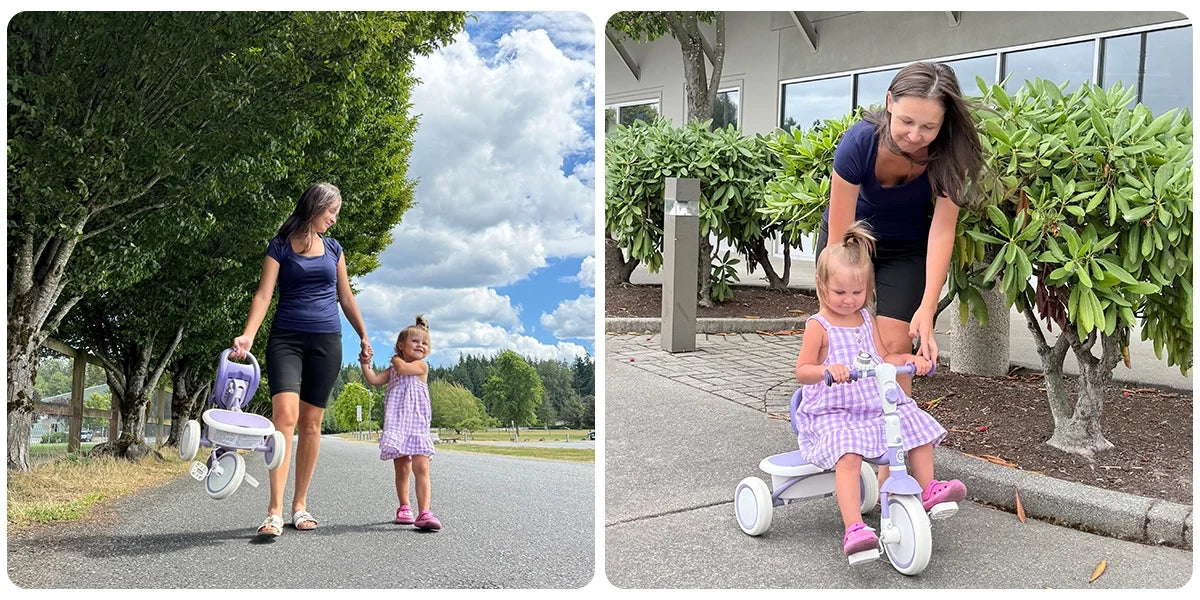
For parents, the right tricycle can also make daily routines easier. A tricycle with a parent push handle can be useful during walks, park trips, or short outdoor rides when a child gets tired or cannot steer consistently yet.
Choosing the wrong tricycle, however, can lead to frustration. If the seat is too high, the pedals are too far away, or the tricycle feels unstable, your child may not enjoy using it. That is why age fit, safety support, and adjustability should be part of the buying decision from the beginning.
A toddler tricycle is more than a toy
A tricycle can help toddlers practice several early movement skills, including sitting balance, leg movement, steering, and spatial awareness. While it should not be treated as a training tool with guaranteed developmental results, it can encourage active play in a fun and age-appropriate way.
How tricycles support outdoor play and coordination
Many toddlers enjoy repeating simple movements. Pedaling, steering, stopping, and turning give them a way to build confidence through practice. Outdoor riding also gives children a reason to move instead of staying seated indoors for long periods.
Why safety, age, and growth features should guide your choice
A good toddler tricycle should fit your child now while still offering room to grow. Features such as an adjustable seat, parent push handle, safety belt, foldable frame, and removable parts can make the tricycle more practical for different riding stages.
What Age Is Best for a Toddler Tricycle?
There is no single perfect age for every child to start using a tricycle. Some toddlers may be ready around 18 months with parent support, while others may be more comfortable closer to age 2 or 3.
Instead of choosing by age alone, parents should also consider the child’s size, balance, interest in ride-on toys, and ability to sit securely.
Tricycles for 18-month-old toddlers
For children around 18 months, a tricycle should be treated more like a parent-guided ride-on toy than an independent riding toy. At this age, many children are still developing balance, steering awareness, and leg coordination.
Helpful features for this stage include:
Parent push handle
Safety belt
Guardrail
Footrest
Stable wheelbase
Comfortable seat support
At this stage, parents should stay close and guide the ride.
Tricycles for 2-year-olds
A tricycle for 2-year-old toddlers should offer both support and learning opportunities. Some children may begin practicing pedaling, while others may still rely on the parent push handle.
Useful features include an adjustable seat, easy-grip handlebar, non-slip pedals, and removable safety parts. The goal is not to force independent riding too early, but to let the child build confidence gradually.
Tricycles for 3-5-year-olds
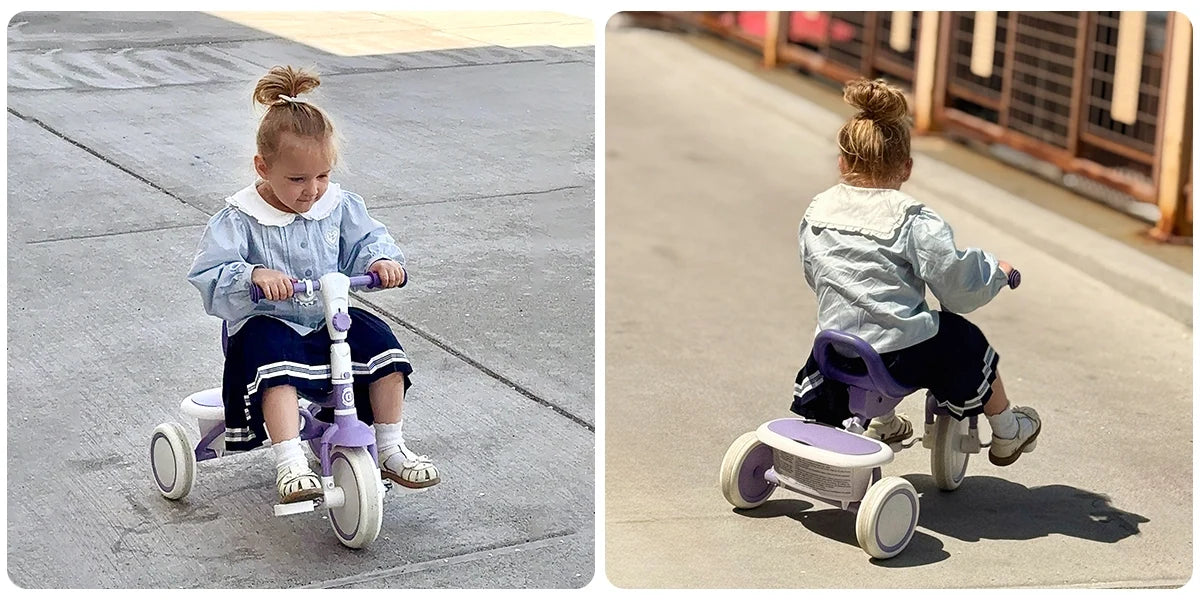
Older toddlers may want more freedom. For children ages 3 to 5, a tricycle should support independent pedaling, steering, and turning. Parents can look for a model that allows certain guided features to be removed as the child becomes more confident.
At this stage, durability, pedal reach, seat comfort, and outdoor wheel stability become more important.
When toddlers are ready to ride independently
A toddler may be ready for more independent riding when they can:
Sit steadily without leaning too much
Reach the pedals comfortably
Hold the handlebar securely
Understand simple instructions like “stop” or “slow down”
Ride in a safe, flat area with adult supervision
Even when a child rides independently, parents should still supervise closely.
Key Features to Look for in a Toddler Tricycle
When comparing toddler tricycles, parents should focus on practical features that affect safety, comfort, usability, and long-term value.
Parent push handle
A parent push handle is one of the most helpful features for younger toddlers. It allows parents to guide the tricycle when the child is not ready to steer, gets tired, or needs help staying on track.
This feature is especially useful for walks, parks, sidewalks, and younger children who are still learning how to control direction.
Safety belt and guardrail
A safety belt or guardrail can help younger toddlers sit more securely. These features are most useful for children who are not yet fully stable or who may try to stand up while riding.
Parents should still supervise at all times. A safety belt is a support feature, not a replacement for adult attention.
Adjustable seat and handlebar
Toddlers grow quickly, so adjustability matters. An adjustable seat can help keep the child’s legs in a comfortable position as they grow. If the seat is too far from the pedals, the child may struggle to ride. If it is too close, riding may feel cramped.
Adjustable features can also extend how long the tricycle remains useful.
Foldable design for storage
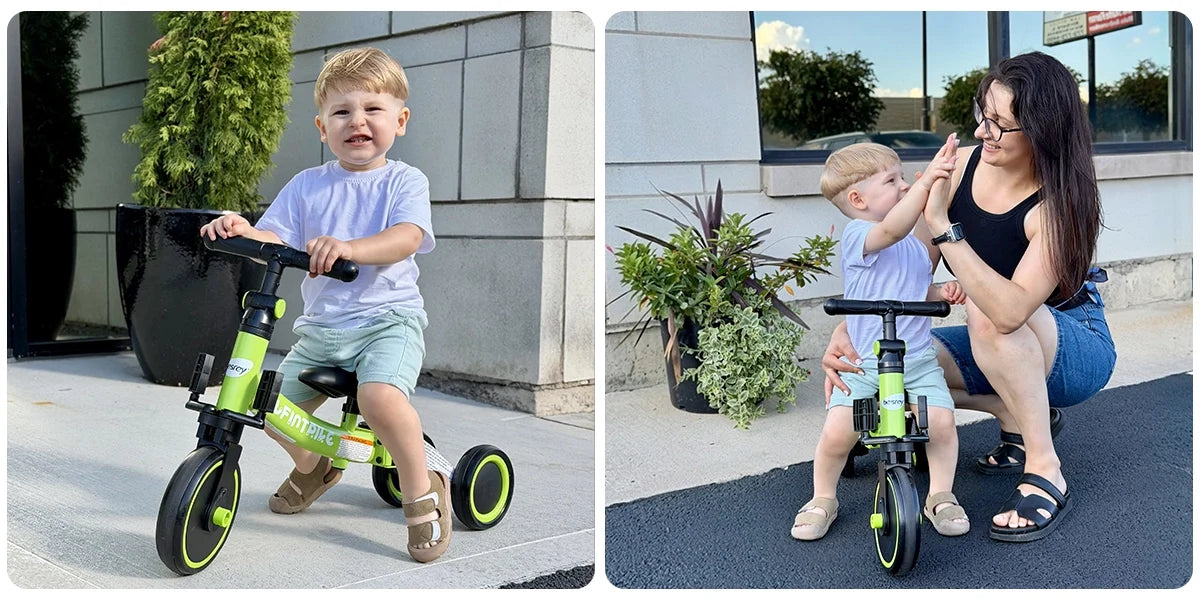
A foldable toddler tricycle can be helpful for families with small apartments, limited garage space, or frequent car trips. If your family plans to bring the tricycle to parks, grandparents’ homes, or travel destinations, folding and portability may be worth considering.
Stable wheels and anti-tip structure
Stability is especially important for toddlers. Look for a tricycle with a stable wheelbase, smooth rolling wheels, and a structure that feels balanced on flat outdoor surfaces.
Parents should avoid letting toddlers ride on steep slopes, wet ground, stairs, or uneven terrain.
How to Choose by Riding Stage
A toddler tricycle should match where your child is now, not where you hope they will be months later. Many children go through different riding stages before they can pedal and steer independently.
Riding Stage | What Your Child Needs | Helpful Features |
|---|---|---|
Parent-guided riding | Support and direction control | Push handle, safety belt, footrest |
Learning to pedal | Support and direction control | Adjustable seat, non-slip pedals |
Learning to pedal | More freedom | Smooth steering, durable wheels |
A convertible tricycle can be useful because it changes with your child’s development. Parents can use more support features early on and remove them later.
Best Toddler Tricycle for Different Family Needs
The best choice also depends on where and how your family will use it.
For Small Apartments
Choose a compact or foldable tricycle. Storage matters if you have limited indoor space.
For Backyard Play
Look for stable wheels, easy cleaning, and a comfortable seat. A backyard is often a good place for beginners to practice.
For Park Walks
A parent push handle, footrest, and safety belt are useful when toddlers get tired or need help staying on track.
For Travel
Choose a lightweight, foldable design that fits in a car trunk and is easy to carry.
Common Mistakes Parents Make
Many parents choose a tricycle based only on appearance or age recommendation. But fit and usability matter more.
Avoid these common mistakes:
Choosing a tricycle that is too large
Ignoring seat height and pedal reach
Forgetting about storage space
Overlooking safety features
Assuming every toddler is ready at the same age
A tricycle should fit your child now, not only months later.
Toddler Tricycle Buying Checklist
Before buying, check these points:
Checklist | What to Look For |
|---|---|
Safety | Stable wheels, safety belt, parent control |
Comfort | Proper seat height, easy handlebar grip |
Growth | Adjustable parts, removable support features |
Storage | Foldable frame, compact size |
Use case | Backyard, sidewalk, park, or travel |
This checklist can help you compare options more clearly instead of choosing only by price or design.
Choosing a Toddler Tricycle That Fits Your Family
The best toddler tricycle should match your child’s age, riding confidence, and your family’s lifestyle.For younger toddlers, choose a model with parent-control and safety support.
For older toddlers, focus more on pedaling, steering, and outdoor durability.
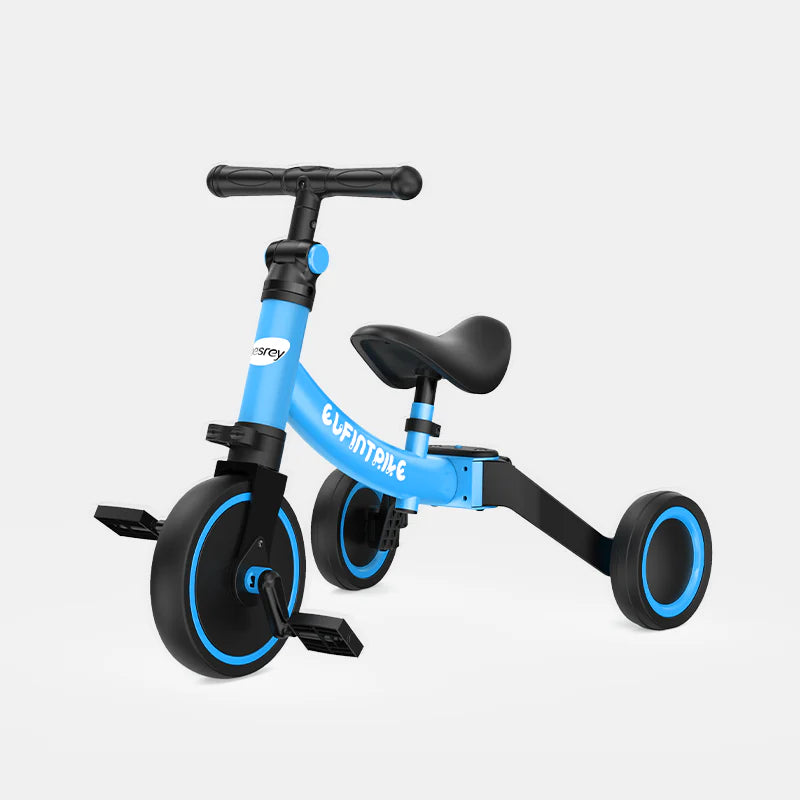
Parents comparing options can explore Besrey’s toddler tricycle collection for designs that support different riding stages, from parent-guided walks to more independent outdoor play.
Conclusion
Choosing the best toddler tricycle means looking beyond color and style. Parents should consider age fit, safety support, comfort, adjustability, storage, and riding environment.
A good tricycle should support your child’s current stage while giving them room to grow. For younger toddlers, parent-control features are especially helpful. For older toddlers, comfort and independent riding features become more important.
Before buying, compare the features carefully and choose a toddler tricycle that works for both your child and your family’s daily routine.