
Besrey - Nov 26 2025
Play Tent Safety Tips: How to Keep Your Child' s Hideout Safe

Children's play tents are more than just an adorable haven: they are spaces where creativity flows freely. Whatever activity your kids want to do, whether it's playing camp, reading their favorite book, or playing with their little siblings and friends, safety should come first. Making sure the play tent is properly set up and used responsibly will help prevent accidents and keep playtime fun and safe.
In this guide, we'll cover practical and safe tips for keeping your child's play tent in good condition. From optimal placement to proper cleaning, this article will help you learn everything you need to know to confidently enjoy your play tent for kids while prioritizing play tent safety.
Placement & Supervision
Choosing the perfect spot for your child's play tent is essential for its safe use. It's always recommended to place it on a flat, stable surface like a carpeted floor or soft mat. Avoid placing it near furniture with sharp edges, hard corners, or objects that could easily fall over.
If you're using a collapsible children’s tent, make sure the poles and connectors are properly secured before your child starts playing. A loose frame could collapse while your child is playing, creating a safety hazard.
Likewise, supervision is very important. Although children's play tents are generally safe, very active toddlers can climb on the structure or pull on the fabric. Adult supervision is especially recommended for kiddos—even if they are in the same room, or by checking on them from time to time. Play tents create a feeling of privacy for kids, but supervision ensures this private world remains safe.
Ventilation & Heat
Airflow inside the tent is significant, especially if your child likes to spend a lot of time inside. Play tents are enclosed spaces by design, and without proper ventilation, the temperature inside can rise quickly. Always choose a tent that offers mesh windows, breathable fabrics, or roll-up windows to allow for air circulation. If it’s necessary, you can also use a small, battery-operated or rechargeable clip-on fan that can help circulate air inside the tent. Here are our recommendations:
· Never place the tent in areas where heat sources are present such as against radiators or heaters, next to electric appliances that heat up. If you decide to set up your children’s tent outside, we recommend that the location must be far from the fireplaces.
· The heat can cause the fabric to overheat, making the interior uncomfortable or unsafe. Additionally, setting up tents outdoors in direct sunlight can weaken the material over time.
· If your child uses blankets or stuffed animals inside the tent, make sure they don't block the windows or ventilation openings. Good airflow keeps the tent cool and prevents overheating during playtime.
Lights & Cables
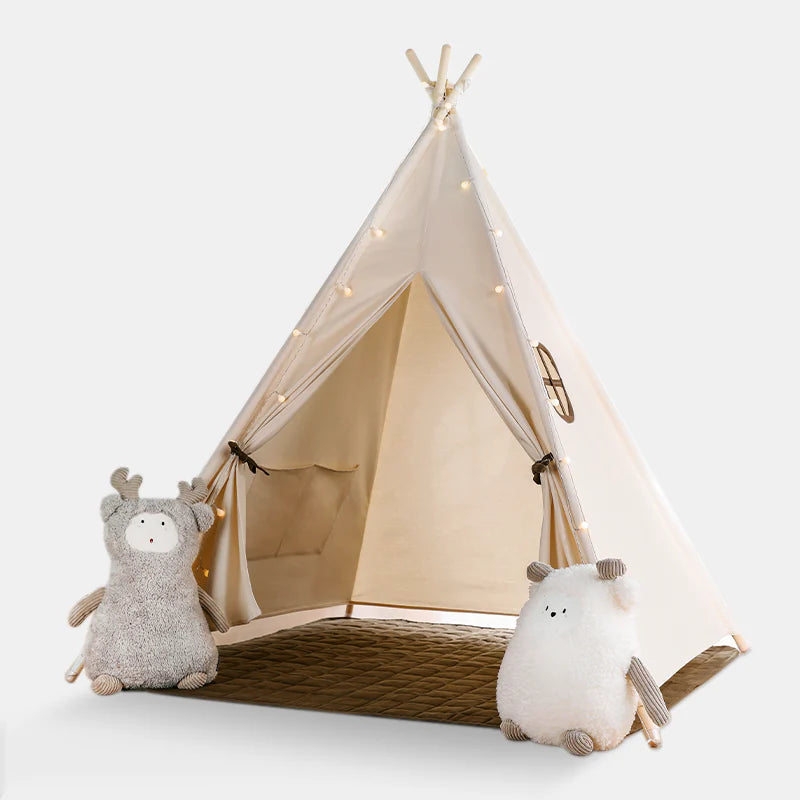
Most parents choose to add string lights or small lights to create a magical atmosphere inside the tent—especially for nighttime or sensory play. While this can be lovely, it's important to install the lighting correctly.
If you decide to install string lights, you should use touch-activated, battery-operated lights, especially LEDs. Avoid installing cables or light extensions that require direct electricity from a switch, as this could cause accidental damage.
Here are some safety considerations for lighting:
· Tie the lights securely to prevent them from dangling.
· Keep batteries out of reach of children to prevent accidents.
· Never use candles, lanterns with a burning flame, or incandescent light bulbs inside or outside the tent.
· Inspect the lights regularly to avoid bad connections or frayed wires that could lead to a short circuit.
If you prefer not to use lights inside the store at all, you can opt for glow-in-the-dark lights, toys with built-in lights, or natural daylight for safety and a warm glow.
Stability & Slip Prevention
A sturdy tent makes all the difference when it comes to preventing accidents like collapse while your child is playing inside. You can start by checking the manufacturer's instructions and making sure you assemble each piece correctly. Tents made of wood or reinforced frames offer better stability compared to other lightweight designs.
Other top tips for helping to stop your teepee from collapsing:
· Place the tent on a dry, soft, and non-slip surface. This will prevent accidents that could endanger your child's safety.
· Another tip to enhance stability is a padded mat inside the tent not only makes it cozier but also provides an extra layer of impact absorption and has a non-slip bottom to keep it in place.
· Keep heavy toys out of the top areas or pockets to avoid uneven weight.
· We recommend constant monitoring: while tents offer a sense of independence, parental supervision is always key, especially with toddlers.
· From time to time, you should make sure that the tent is for loose joints, frayed ropes, or weakened parts. If damage is found, repair or discontinue use to prevent troubles.
Preventing slippage is also very important. If the floor is tiled or wooden, you should place a rug under the tent to keep it stable and prevent it from moving while the children are moving around. You must prevent children from jumping on it, climbing on the fabric, or hanging from the tent poles—these actions could cause the structure to collapse.
Cleaning
Keeping your child's play tent clean and tidy is essential for safe maintenance and to ensure your child can play safely. Children often bring snacks, toys, or even objects from outside the house, making the inside dirty or stained.
Follow these tips for proper cleaning:
· Clean up splashes immediately using mild soap and warm water.
· You can use a vacuum cleaner to remove some dirt and dust from inside.
· If the tent design allows to wash removable fabric covers. For this process, we recommend turning the tent inside out and shaking or brushing out any loose dirt or crumbs. Then you can rinse and clean, remember to let it dry for several hours.
· Avoid letting it dry in direct sunlight to prevent ultraviolet damage to any nylon or polyester fabric.
A clean tent helps prevent allergy triggers and keeps the space safe for children with health sensitivities. Regular cleaning also helps extend the life of the fabric and frame.
Conclusion
A play tent is one of the most exciting incorporations to a child's playroom, providing endless hours of creativity, storytelling, and a cozy haven for reading. But safety must be the number one priority. By focusing on proper placement, supervision, ventilation, safe lighting, stability, and regular cleaning, you will ensure that your child's tent remains ready for fun and at the same time a safe place.
Whether you’re choosing your first play tent for kids or upgrading to a more durable model, exploring options like those at Besrey, they can provide peace of mind because their designs are well thought out and focused on safety.
With proper assembly and attention to important details, your child's tent will not only be a magical place, but a safe one too.