
Besrey - Feb 23 2026
The First 7 Days on a Kids Scooter: What Most Parents Don’t Expect

Let's be brutally honest: as parents, when we first buy a kids' scooter, we immediately imagine our children riding it like pros, instant fun and instant mastery. But the reality is very different: it tends to be tedious. The first day’s learning scooter kids experience is like a Pandora's box: a mix of fun and challenging feelings. From moments of excitement to moments of hesitation, from progress to frustration, the process is like a roller coaster. Understanding each of these phases will help us as parents set realistic expectations and give our children the right support.
This article explores the kids scooter beginner tips every parent should know, breaking down the first seven days into stages. By the end, you’ll see why the first week is less about perfection and more about building practice, confidence, and family memories.
Days 1–2: Excitement and Hesitation
The first two days are dominated by two very strong emotions: excitement and uncertainty.
Day 1: High Energy & Exploration: The first day is marked by the novelty of riding a new vehicle. It's pure adrenaline and excitement mixed together; most children simply stand on the deck to test its stability. Let them explore the scooter like a new toy: start indoors on a soft surface like a rug to reduce their fear of falling on the pavement.
Day 2: The Push-and-Pause Phase: This is the day when doubts arise, and children begin to hesitate as they realize they must push the scooter with one leg while balancing with the other. Frustration often sets in at this stage. Instead of riding, they might simply ‘walk’ the scooter, as the natural fear of falling emerges. To help build confidence, you can hold the handlebars so they can focus on pushing forward.
Ensure they wear a properly fitted helmet and knee/elbow pads from the start. Knowing they are "armored" often helps nervous beginners take that first real push.
Days 3–5: Progress and Frustration
Days 3–5 mark a shift from simple exploration to building actual muscle memory. This is often the most challenging period because children are trying to coordinate several skills at once, leading to both visible breakthroughs and occasional frustrations.
Day 3: Overconfidence: Many children begin to feel the "glide" for the first time. That's where it appears overconfidence. This is when they might try to go faster than their braking skills allow.
Day 4: Peak Frustration: With progress comes impatience. Falls, stumbles, or failed attempts at steering can lead to tears. Some children may even refuse to continue for a while.
Day 5: Coordination and Control: Kids begin to understand balance and coordination. They may ride short distances without stopping, or learn to turn corners. Their confidence grows, and they start to feel proud.

Days 6–7: Building Habits
By the end of the first week, the focus shifts to consistency and safety habits. Effort becomes instinct.
Day 6: Refining Technique & Terrain: Now that they have the "push-glide" down, Day 6 is for perfecting the details. They may even start racing siblings or friends. Introduce small challenges, like riding along a straight chalk line or navigating around obstacles.
Day 7: Route Planning & Independence: The final day of the first week is about applying skills to a real-world environment. By now, they should feel comfortable enough to "explore" rather than simply "practice." The hesitation of the second day gives way to a sense of autonomy.
This is the stage where consistency is key. Encourage them to take short rides instead of long, strenuous sessions. Praise effort, not just success. By day seven, riding the scooter becomes less of a novelty and more of a guaranteed source of fun.
How Parents Can Support the First Week
To help your children master the scooter during the first week, the parent's role should be half safety officer and half cheerleader. Here are kids scooter beginner tips that make the first week smoother:
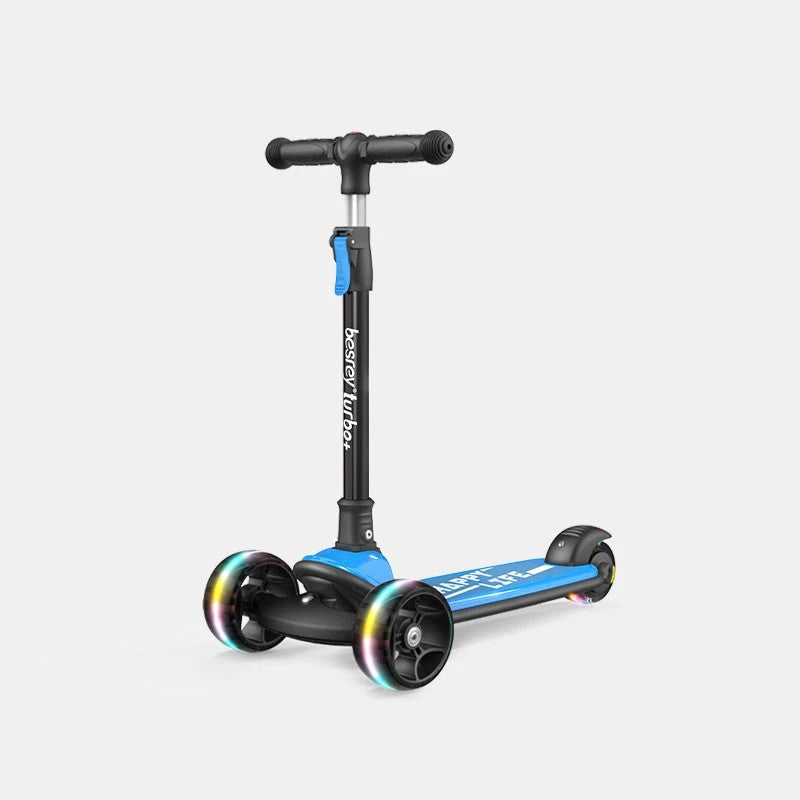
▪Choose the right scooter: A model like the Besrey Folding Toddler Kick Scooter is designed for beginners, with adjustable height and stable wheels.
▪Focus on the "Process," Not the "Performance": Positive reinforcement motivates kids to keep trying.
▪Enforce the "No Helmet, No Ride" Rule: Establish safety as a non-negotiable habit from minute one.
▪Create a "Safe Zone": Find a flat, smooth, and wide-open space away from traffic and steep hills.
▪Keep Sessions Short: Aim for 15–20-minute sessions. Stopping while they are still having fun—rather than when they are exhausted and falling—leaves them excited to try again the next day.
Remember: Children mirror their parents’ attitudes. If you stay calm and supportive, they’ll learn resilience.

Conclusion
The first day’s learning scooter kids' experience is full of surprises. Parents tend to expect immediate success, but the reality is a journey that involves excitement, hesitation, progress, frustration, and habit formation. With the right support, children will not only learn to ride a scooter, but it will also be a process of developing confidence, patience, and perseverance.
A kid’s scooter is more than a fun toy—it’s a tool for growth. By following these kids scooter beginner tips, as parents, we can transform this first week into a challenge that will lay the foundation for new adventures.
Article credit:
https://gyroorboard.com/blogs/learn-with-gyroor/what-age-do-kids-learn-to-ride-a-scooter-a-parent-s-guide?srsltid=AfmBOorTwuu1tP4ib20JnOMSgki0yLmcETA1wYQ7M8nETDuDLgWKd2pZ
https://www.spiritedpuddlejumper.com/how-to-teach-your-2-year-old-to-ride-a-scooter/
https://retrospec.com/blogs/gear-guides/kids-scooter-safety-gear-checklist#:~:text=1.,wheels%20(included%20on%20Chipmunk%20Plus)
https://www.yedoo.eu/en/article/how-to-teach-children-to-ride-a-scooter-7igPJX#:~:text=Avoid%20roads%2C%20where%20cars%20pass,ride%20perfectly%20in%20one%20afternoon
https://hot-ideas.org/basic-skills-advanced-level.asp#:~:text=Decrease%20hand%20fatigue%20and%20increase%20bilateral%20coordination,opposition%20skills%20to%20close%20a%20zipper%20bag