
Besrey - Dec.27 2025
What are the advantages and disadvantages of using a balance bike over training wheels when teaching kids how to ride bikes?

Teaching our children to ride their first bike becomes one of their most cherished childhood memories. Over the years, the dilemma of choosing between balance bikes and bikes with training wheels has arisen. While training wheels are considered the more popular option, balance bikes have been gradually gaining ground as a way to encourage children's motor development. So, we ask ourselves, what is the best way to teach a kid to ride a bike?
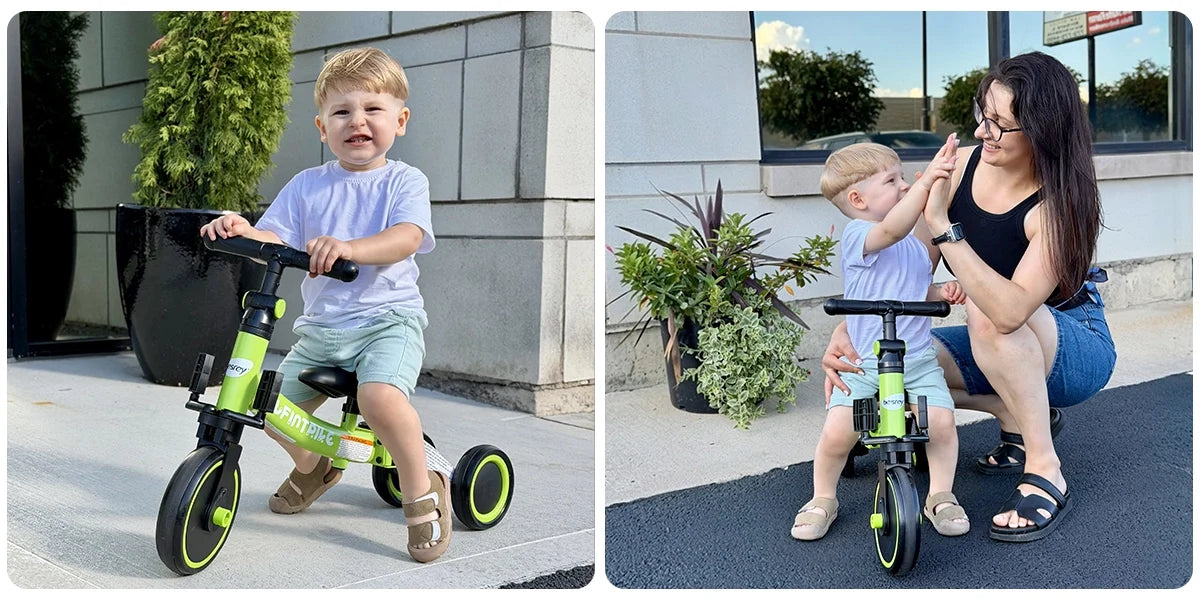
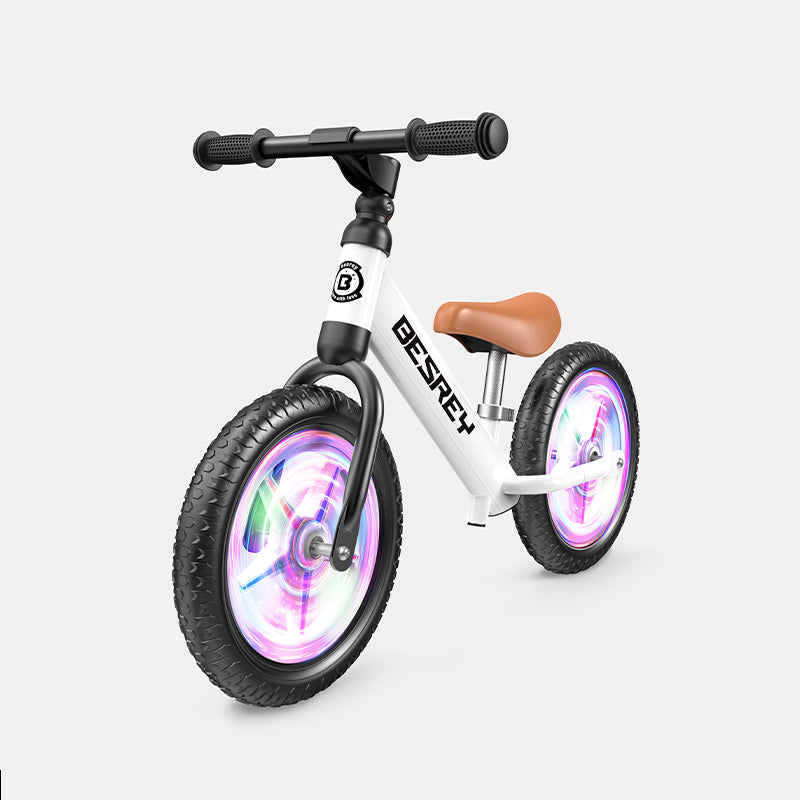
In this article, we’ll explore the balance bike vs training wheels pros and cons, helping parents understand the advantages and disadvantages of each approach. We’ll also describe why products like the Besrey Balance Bike for Toddlers have become a go-to choice for young riders.
What Is a Balance Bike? (vs. Training Wheels)
According to the simplest definition we can make about what a balance bike is, we can say that balance bikes, sometimes called strider bikes, have handlebars, a seat and two wheels. There are no pedals, no cogs, no chain, and usually no brakes either. To move, kids sit on the seat, push themselves forward using their feet, and gradually learn to glide as they gain confidence. To slow down and stop, they simply drag or push their feet against the ground.
In contrast, training wheels are small wheels that are added to the back of a bicycle. Their main purpose is to prevent tipping, allowing the child to focus on pedaling without worrying about balance. While this method offers stability and safety, it could delay the development of true balance skills.
We could summarize that the main difference lies in what the child is meant to master: balance bikes teach balance before pedaling, while training wheels focus on pedaling before balance.
Advantages of Balance Bikes – Why many experts and parents favor balance bikes for learning
Advantages of Balance Bikes
· Balancing and pedaling skills: Balance bikes allow children to develop the mechanics of riding a real bicycle. Instinctively, they learn to lean into turns, adjust their posture, and maintain stability. This natural, at-the-pace progression makes balance bikes a favorite among experts.
· Boosts Independence and Confidence: The biggest advantage of balance bikes is the ability to learn to ride independently. Because children focus on steering and balance, the transition to a pedal bike will be easier and faster.
· Lightweight and manageable: Ergonomically designed bikes like the Besrey Balance Bike for Toddlers are lightweight and easy to handle. For children, it's a safe option that allows them to control the bike by braking with their feet. It's also easy for parents to carry when needed.
·Safety features: Since the design has no pedals or chains, balance bikes reduce the risk of scrapes or unexpected falls. Balance bikes are safer than traditional bicycles or tricycles because they allow children to keep their feet on the ground. This feature makes it easier to stop quickly and reduces falls at high speeds.
·Promotes physical activity: It encourages physical activity and outdoor play, contributing to overall health.
Disadvantages of Balance Bikes
· No Pedaling Practice: Since balance bikes do not include pedals, children do not learn the skill of pedaling and the transition to a real bicycle can be tedious.
· Short Lifespan and may Require a Second Bike: Once a child grows and can master balancing, the transition to a regular pedal bike is necessary. For some parents, this type of bike can seem like too much of an expense, and they prefer a bicycle with pedals.
· Terrain Limitations: Balance bikes are only ideal for smooth surfaces such as avenues, parks, or sidewalks. They are not recommended for open terrain, as they do not have pedals or brakes, making them unsafe for children.
Advantages of Training Wheels – Why the traditional method still has its merits in some cases.
Advantages of Training Wheels
· Extra layer of stability: Training wheels provide support for safe balancing, allowing children to focus on pedaling without the fear of falling. This can be comfortable for both parents and children.
· Early Focus on Pedaling: Training-wheel bikes include pedals, which is very convenient for children to learn how to pedal and use the brakes, which can be beneficial when transitioning to a regular bicycle.
· Confidence Building and Fear Reduction: The stability provided by the extra wheels prevents the bicycle from tipping over, which helps minimize the fear of falling during the initial stages of use. This helps build the child's confidence and eventually allows them to master pedaling and balancing.
· Cost-Effective Option: You can save money by making a single purchase instead of buying a balance bike separately. This also allows you to transition to a regular bicycle without needing to buy another bike.
Disadvantages of Training Wheels
· Artificial sense of stability: The biggest criticism of training wheels is that they delay the development of balance skills. Children often lean on the wheels instead of developing proper coordination.
· Difficult Transition: Removing training wheels can be intimidating and frustrating, as children will be dealing without support, which can be frightening.
· Poor Steering Habits: Kids learn to steer with the handlebars, not by leaning, which is the correct way, requiring them to unlearn this later.
· Training wheels can’t be used on rough ground: Training wheels can wobble on surfaces that are not flat, increasing the risk of tipping over instead of preventing it.
Conclusion
When comparing balance bikes vs training wheels, the best choice will depend on your child's age, confidence level, and learning style. However, balance bikes have been shown to offer a natural way to teach children how to ride a bicycle.
Balance bikes help children master the most important cycling skill: balancing, before pedaling. This makes the learning experience enjoyable and fun, whereas training wheels, while also having their merits, unfortunately delay the development of essential and basic skills.
For parents looking for the best way to teach a kid to ride a bike, a high-quality option like the Besrey Balance Bike for Toddlers provides a safe, successful, and confidence-boosting start. By focusing on balance first, children are more likely to transition to two wheels with ease—and enjoy the ride along the way.
Article credit:
https://usacycling.org/article/balance-bike-vs-training-wheels
https://www.mffy.com/blog/i-am-a-huge-fan-of-balance-bikes
https://www.nbcnews.com/business/consumer/balance-bikes-overtake-training-wheels-teaching-young-riders-n436971
https://lightfootcycles.com/blogs/all/a-comprehensive-analysis-of-balance-bikes-pros-and-cons
https://www.stanfordchildrens.org/en/topic/default?id=buying-a-bike-for-your-child-1-2954#:~:text=Between%20ages%204%20and%208,until%20age%2010%20or%20older
https://www.kidsrideshotgun.ca/blogs/news/stabilisers-suck-why-your-child-shouldn-t-use-training-wheels#:~:text=Training%20wheels%20don't%20teach,a%20crutch%20they%20depend%20on