
Besrey' - Mar 23 2026
How a Toddler Tricycle Can Turn Weekend Walks into Better Parent-Child Bonding Time

Weekend activities with toddlers are supposed to be slow and relaxing, but for many parents, they look more like this:
Five minutes into the walk, your child says, “Carry me!”
They stop to pick up rocks, bend down to smell flowers, chase every passing dog…
They either can’t keep walking or walk at a snail’s pace.
Your “weekend stroll” becomes a combo of walking + negotiating + carrying a toddler + existential fatigue.
None of this means you’re doing anything wrong.
It’s simply because a toddler’s walking pace, curiosity level, and physical development are nothing like an adult’s.
The World Health Organization (WHO) notes that:
“Toddlers’ independent exploration skills are still developing, and their walking pace typically doesn’t match that of adults.”
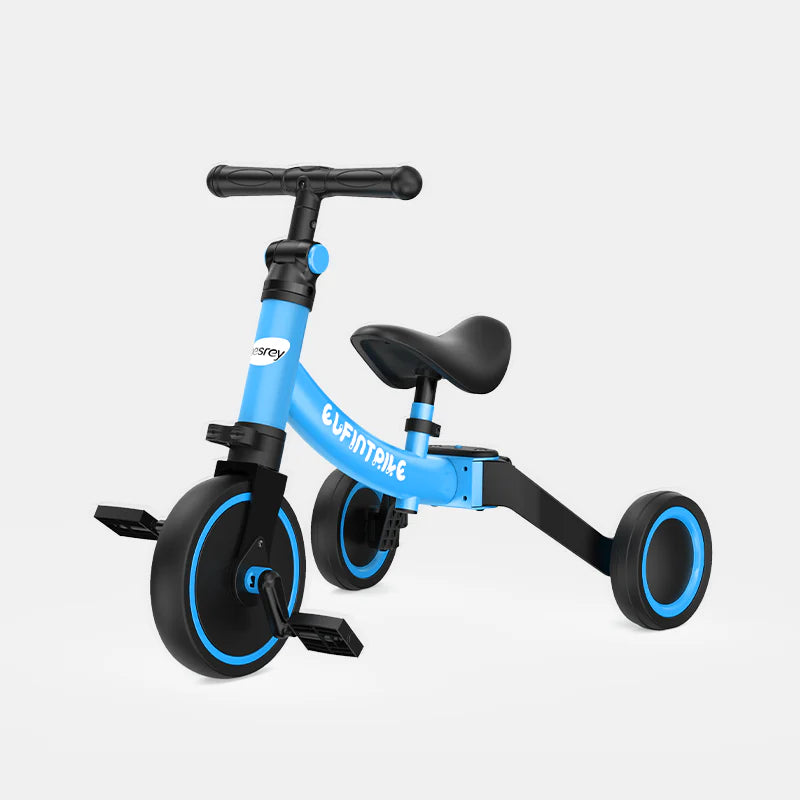
This explains why more and more parents are choosing toddler tricycles (especially ones with a parent push handle).
They let kids stay engaged and feel independent, while parents can maintain a comfortable walking pace—turning a chaotic outing into actual quality family time.
Why Toddler Walks Fall Apart—Pace and Stamina Are Different
According to the CDC’s analysis of physical activity in children ages 1–3:
Toddlers have very short attention spans
They walk slowly and inconsistently
Their energy burns out quickly
Their strong curiosity often leads to running off suddenly
Which means:
A simple walk is too challenging for toddlers and too exhausting for parents.
A tricycle solves the contradiction perfectly:
Kids feel involved. Parents stay in control.

Turn a Walk into a Shared Parent-Child Project
Walking doesn’t have to be only walking. When you introduce a trike, the outing becomes a project you both participate in, not two separate experiences. What happens when you add a tricycle to your weekend walk?
These shifts turn chaos into genuinely enjoyable family time:
1. Your Child Gains a Sense of Independence — and Becomes More Cooperative
The American Academy of Pediatrics (AAP) emphasizes:
“Giving toddlers age-appropriate autonomy enhances cooperation and emotional stability.”
On a tricycle, kids feel like they’re steering—even though parents still control the real direction.
This “illusion of independence” reduces tantrums and dramatically boosts cooperation.
2. Parents Can Finally Walk at a Normal Speed
With a push handle, you can move at an adult's pace while your child sits safely.
This allows you to:
Tell stories
Talk about flowers or animals along the path
Teach colors and numbers
Actually enjoy a calm conversation instead of constantly lifting your child
When walking becomes effortless → connection becomes natural → parent-child bonding grows stronger.
3. Walks Last Longer — From 10 Minutes of Struggle to 40–60 Minutes of Fun
Toddlers love the feeling of riding, and it’s far less tiring than walking.
In short:
“10 minutes of meltdown walking” → “45 minutes of excited riding.”
This transforms your outing into:
A longer activity
Fewer emotional ups and downs
A fun “little weekend adventure.”
Plus… your child will nap better afterward (every parent knows this!).
4. A Simple Stroll Turns Into an Interactive Experience
Instead of stopping every few steps, you now get to:
✔ Choose the route together
✔ Talk about things you see
✔ Experience sunshine, breeze, and movement as a team
The WHO’s guidelines for early parent-child interaction state:
“Shared outdoor activities significantly enhance parent-child attachment.”
A tricycle naturally turns a walk into this kind of shared activity.

How a Toddler Tricycle Changes Weekend Walks
The best push trike for toddlers completely transforms the parent-child dynamic:
✔ Keeps toddlers moving longer
Pedaling is fun and requires less stamina than walking long distances.
✔ Encourages physical development
Balance, motor skills, coordination—check, check, check.
✔ Gives parents control when needed
Push handles let adults step in without breaking the toddler’s sense of independence.
✔ Reduces tantrums and ‘’carry me!’’ moments
A toddler who rides is a happy toddler.
✔ Makes outings longer, smoother, and more enjoyable
Suddenly, a 10-minute meltdown walk becomes a 45-minute peaceful adventure.
If you want stress-free outdoor bonding, a toddler tricycle with push handle is a game-changer.
How to Choose the Right Tricycle for Your Child (No More Guesswork)
For ages 1–4, these features matter most:
1. Adjustable Push Handle (Essential for Parents)
Allows easy control of speed and direction without bending over.
2. Safety Features (Non-negotiable)
5-point harness
Safety bar
Stable frame
3. Convertible Design (Grows With Your Child)
From full parent control → partial independence → self-riding mode.
4. Durable Wheels (EVA or Rubber)
Good for sidewalks, parks, and uneven paths.
5. Sun Canopy (Highly Recommended)
A lifesaver for outdoor outings.
6. Storage Basket (Surprisingly Useful)
Holds snacks, water bottles, or small toys—keeping your hands free.
7. Comfortable Seat (Determines How Long Your Child Will Stay Happy)
If they sit comfortably, you walk comfortably.
Conclusion
A tricycle isn’t just a tool — it’s a parent-child bonding booster.
It gives families:
Easier outings
Fewer meltdowns
More natural interaction
Better outdoor exploration
Longer, more enjoyable walks
If you're looking for a budget-friendly, low-effort, parent-child bonding outdoor activity, a push-handle toddler tricycle might be the best investment you can make.
Article credit:
World Health Organization (WHO). (2019). Guidelines on physical activity, sedentary behaviour and sleep for children under 5 years of age. World Health Organization. https://www.who.int/publications/i/item/9789241550536
Centers for Disease Control and Prevention (CDC). (2023). Physical activity guidelines for young children. U.S. Department of Health & Human Services. https://www.cdc.gov/physicalactivity/basics/children/index.htm
American Academy of Pediatrics (AAP). (2018). Promoting healthy development in early childhood. In: Bright Futures Guidelines for Health Supervision of Infants, Children, and Adolescents (4th ed.). American Academy of Pediatrics. https://brightfutures.aap.org