

Besrey - Feb 26 2026
The “Won’t Steer” Phase: Why Toddlers Struggle With Turning

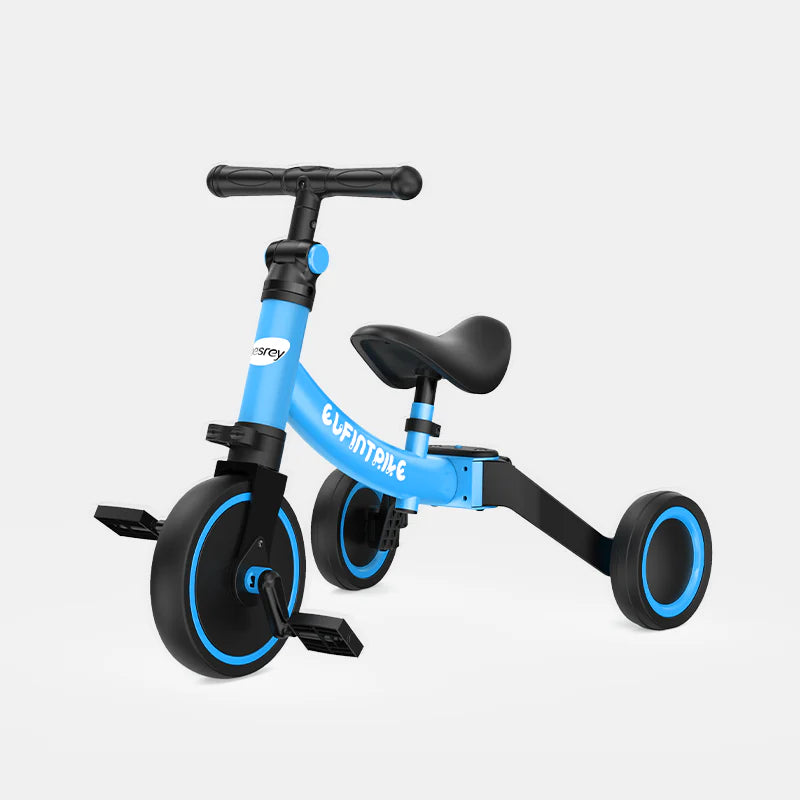
Many parents notice the same thing at the start: their toddler can push forward on a ride-on toy, tricycle, or scooter, but the moment a turn is needed, everything falls apart. They stop, freeze, over-correct, or simply aim straight into the nearest wall.
That “won’t steer” phase is normal.
That “won’t steer” phase is normal.
Turning is more complex than moving forward. A child has to look ahead, notice space, shift body weight, move hands in the right direction, and stay balanced at the same time. In early childhood, these skills are still developing together. Harvard’s Center on the Developing Child explains that young children build self-control, working memory, and flexible thinking gradually, and repetition helps them learn how to manage actions within simple rules.
Turning is more complex than moving forward. A child has to look ahead, notice space, shift body weight, move hands in the right direction, and stay balanced at the same time. In early childhood, these skills are still developing together. Harvard’s Center on the Developing Child explains that young children build self-control, working memory, and flexible thinking gradually, and repetition helps them learn how to manage actions within simple rules.
What the “won’t steer” phase often looks like
Some toddlers hold the handlebar stiffly and ride straight until they stop. Others turn too sharply because they move their whole upper body at once. Some children can steer only when moving very slowly, and lose control as soon as they gain speed.
This fits what we know about early development: young children learn best through predictable, repeated practice, not through long explanations. Harvard’s executive-function materials note that repetition in simple games helps children remember rules and manage behavior more effectivel

How to teach turning without overwhelming your child
Start with wide turns, not tight ones. Use chalk circles, cones, or even two stuffed animals as “turn points.” Keep the cue simple: look, lean, turn.
Use wide loops before figure-eights
A large circle gives toddlers time to process the turn. A narrow turn demands too much too soon.
Slow the task down
Children 3 to 5 should be active throughout the day, but that does not mean every movement session should be intense. The CDC specifically notes that caregivers should encourage varied active play, including riding a tricycle.
Children 3 to 5 should be active throughout the day, but that does not mean every movement session should be intense. The CDC specifically notes that caregivers should encourage varied active play, including riding a tricycle.
Teach with visual targets
Instead of saying “turn better,” say “ride toward the cone, then go around it.” Toddlers usually respond better to visible goals than abstract coaching.

When to worry—and when not to
If your child is improving slowly, that is still improvement. Most toddlers do not need to master steering quickly to be “on track.” But if your child consistently cannot coordinate basic movement, avoids all ride-on toys, or seems distressed by simple direction changes across many activities, it may be worth discussing with your pediatrician.
If your child is improving slowly, that is still improvement. Most toddlers do not need to master steering quickly to be “on track.” But if your child consistently cannot coordinate basic movement, avoids all ride-on toys, or seems distressed by simple direction changes across many activities, it may be worth discussing with your pediatrician.
Conclusion
The “won’t steer” phase is usually not a sign that your child is not ready. It is a sign that steering is still a whole-body learning task. Make the turns bigger, the sessions shorter, and the goals simpler. Confidence with turning usually grows one wide corner at a time.