
Besrey- May 28 2026
Best First Scooter for a Cautious Toddler: Features That Help Build Confidence

Some toddlers jump onto a scooter immediately, eager to glide down the sidewalk without hesitation. Others approach riding much more carefully. They may hold tightly to a parent’s hand, hesitate to lift one foot, or lose confidence after even a small wobble. For these children, choosing the right scooter matters even more.
A cautious toddler does not necessarily lack ability. Often, they simply need more stability, predictability, and emotional comfort while learning new physical skills. The right toddler scooter can help transform uncertainty into confidence—one small ride at a time.
For cautious beginners, the most important qualities are safety, stability, and ease of control.For cautious toddlers, especially, confidence should always come before speed.
1. Why Some Toddlers Need a Different Kind of First Scooter
Not every child approaches movement the same way.Some toddlers naturally seek excitement and physical challenges. Others are more observant, slower to warm up, and more sensitive to unfamiliar sensations like balancing, steering, or moving quickly.
Developmental researchers note that temperament plays a major role in how children approach new motor activities.A cautious child may require additional repetition and predictability before feeling emotionally comfortable trying something new.
This often becomes noticeable with scooters.
A cautious toddler may:
Stop after one small fall
Refuse to glide independently
Feel nervous about speed
Prefer holding onto adults
Watch other children instead of participating
Become frustrated quickly
These reactions are completely normal.The goal is not to force bravery. The goal is to help the child feel safe enough to explore movement gradually.
That is why selecting the right “scooter for a cautious toddler” matters so much.
2. The Features That Help Cautious Toddlers Feel More Secure
The best beginner scooters are designed to reduce instability and support confidence-building.
Here are the most important features to look for:
1.Three-Wheel Design
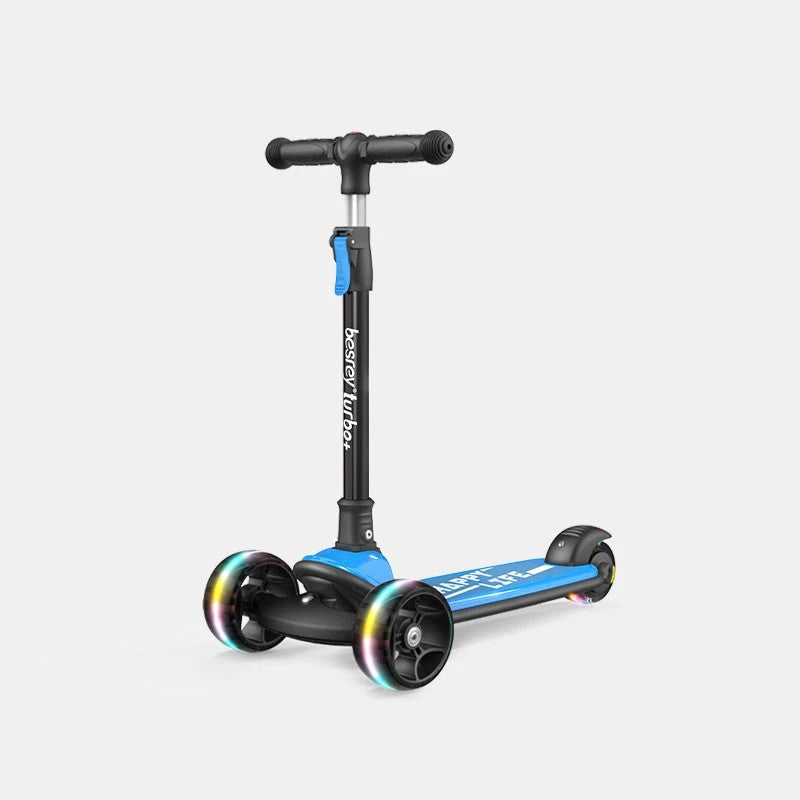
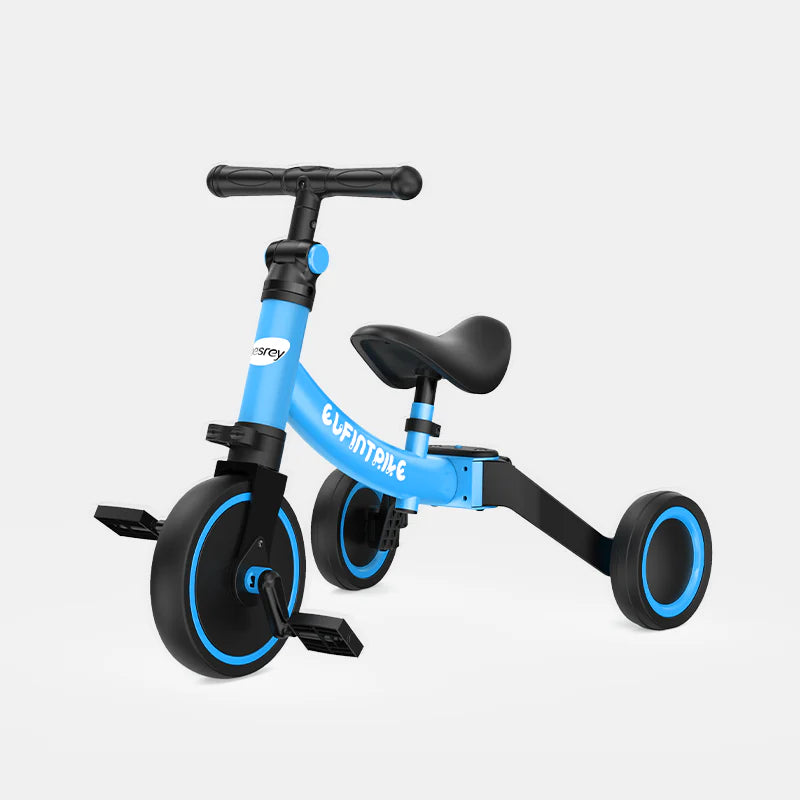
For most cautious toddlers, three wheels provide the best introduction to riding. A wider wheel base creates more stability and reduces side-to-side tipping.Research in pediatric motor learning suggests that young children build movement confidence more effectively when stability demands are introduced gradually.A three-wheel scooter allows toddlers to focus on steering and coordination without constantly worrying about balance.
2.Wide, Low Deck
A low deck helps toddlers step on and off more easily.This reduces fear and improves overall control.A wider standing surface also allows cautious riders to place both feet comfortably while learning.
3.Lean-to-Steer Technology
Many toddler scooters use lean-to-steer systems rather than traditional turning handlebars.This design feels more natural for younger children because it mirrors how toddlers already shift body weight while walking and balancing.
For cautious riders, smoother steering often feels safer and easier to predict.
4.Adjustable Handlebars
Proper handlebar height improves both comfort and control.If handlebars are too high, toddlers may feel unstable. Too low, and posture becomes awkward.An adjustable design allows the scooter to grow gradually with the child.
5.Slow, Stable Wheels
Large, smooth wheels help create predictable movement.Fast, highly responsive scooters can feel intimidating for beginners.
A Best First Scooter should prioritize control—not speed.
6.Lightweight Construction
Heavy scooters are harder for cautious toddlers to maneuver independently.A lightweight scooter allows children to feel more physically capable and reduces frustration when turning or repositioning the scooter.
3. What Makes a Scooter Feel Too Fast or Too Unstable?
Sometimes a toddler refuses a scooter not because they dislike riding, but because the experience feels overwhelming.Several factors can unintentionally make scooters feel intimidating.
•Oversized Scooters
Many parents purchase scooters that children can “grow into.”Unfortunately, scooters that are too large are harder to steer, stabilize, and control.This often increases fear.
•Sloped Surfaces
Even gentle inclines can suddenly increase speed beyond a toddler’s comfort level.For beginners, flat and smooth surfaces are always best.
•Overly Responsive Steering
Some scooters turn very sharply with small movements.Cautious toddlers often prefer slower, more predictable steering responses while learning.
•Fast Wheels
Scooters designed for older children may glide faster than beginners can comfortably manage.
Confidence develops more effectively through controlled movement than through speed.
4. How to Match a First Scooter to Your Toddler’s Confidence Level
Choosing the right scooter means considering emotional readiness alongside physical ability.
•For Highly Cautious Toddlers
Look for:
Three-wheel design
Extra-wide deck
Lean-to-steer function
Lightweight frame
Slower wheel speed
The focus should remain entirely on stability and predictability.
•For Moderately Confident Beginners
Children who show curiosity but still hesitate occasionally may benefit from:
Adjustable handlebars
Smooth outdoor wheels
Lightweight steering
Slightly faster glide capability
These features allow skill progression without overwhelming the child.
•For More Adventurous Toddlers
Children who already enjoy ride-on toys, climbing, or balance bikes may adapt quickly to scooters with more responsive handling.Still, stability should remain the priority during the beginner stage.

5. How Parents Can Make the First Few Rides Easier
The scooter itself matters—but the learning environment matters just as much.
Step 1 : Start on Flat, Smooth Ground
Driveways, quiet sidewalks, or empty playground paths work well.
Avoid slopes or uneven pavement initially.
Step 2 : Keep Sessions Short
Toddlers learn best through short, positive experiences.
Even 10 minutes can be enough for beginners.
Step 3 : Let the Child Control the Pace
Avoid pushing, pulling, or rushing the child.
Independent exploration helps build genuine confidence.
Step 4 : Focus on Fun, Not Performance
At first, “success” may simply mean standing on the scooter comfortably.
That is perfectly normal.
Step 5 : Stay Calm After Falls
Small falls are part of learning.
The way adults react strongly influences how toddlers interpret those moments emotionally.
A calm response helps children feel safe trying again later.

Conclusion:
The Best First Scooter for a cautious toddler is not the fastest or most advanced model.It is the one that helps a child feel stable, capable, and emotionally safe enough to keep practicing.
A thoughtfully designed scooter for a cautious toddler should prioritize balance support, predictable movement, and gentle learning curves over speed or flashy features.Most importantly, parents should remember that cautiousness is not weakness.
Many cautious toddlers become highly confident riders once they are given the right support, enough time, and opportunities to succeed gradually.Confidence does not grow from pressure.It grows from repeated experiences of feeling safe, capable, and in control.
Article credit:
1.American Academy of Pediatrics. The Power of Play in Child Development. https://www.healthychildren.org
2.Center on the Developing Child, Harvard University. Early Childhood Temperament and Development. https://developingchild.harvard.edu
3.Adolph KE, Hoch JE. Motor development and learning in early childhood. Annual Review of Psychology. 2019.
4.U.S. Consumer Product Safety Commission. Scooter Safety Guidelines. https://www.cpsc.gov