
Besrey - May 25 2026
Can an 18-Month-Old Use a Balance Bike Safely? What Readiness Really Looks Like

Balance bikes have become one of the most recommended first ride-on toys for toddlers, helping children develop coordination, balance, and confidence before transitioning to pedal bikes. But many parents still wonder: What age for balance bike use is actually appropriate? More specifically, is 18 months too early for a balance bike?
The answer depends less on age alone and more on developmental readiness.
Some 18-month-olds are physically and emotionally ready to begin exploring a balance bike, while others still need time to develop foundational motor skills first. The key is understanding what true readiness looks like—and choosing the right setup to support safe learning.
According to the American Academy of Pediatrics, ride-on toys should always match a child’s developmental abilities rather than relying only on age recommendations printed on packaging.¹ Early movement experiences should support confidence, not create frustration or injury risk.
When introduced thoughtfully, a balance bike can become a valuable tool for healthy toddler development.
1. Is 18 Months Too Early for a Balance Bike?
For some toddlers, 18 months is absolutely an appropriate starting point.
At this age, many children begin developing stronger balance, coordination, and independent mobility. They are increasingly curious about movement and eager to explore their environment physically.
However, developmental differences between toddlers can be significant.
One 18-month-old may confidently run, climb, and steer push toys, while another may still be mastering stable walking. That is why the question is not simply “What age for balance bike use?” but rather “Is my child developmentally ready?”
Research in early childhood motor development shows that balance and coordination improve rapidly between 18 and 24 months as toddlers gain greater postural control and body awareness. A balance bike can support these developing skills—but only if introduced at the right pace.
The goal at this stage is not fast riding or long-distance gliding.
It is simply helping toddlers become comfortable with:
Sitting independently
Walking while straddling the bike
Steering gently
Learning body balance gradually
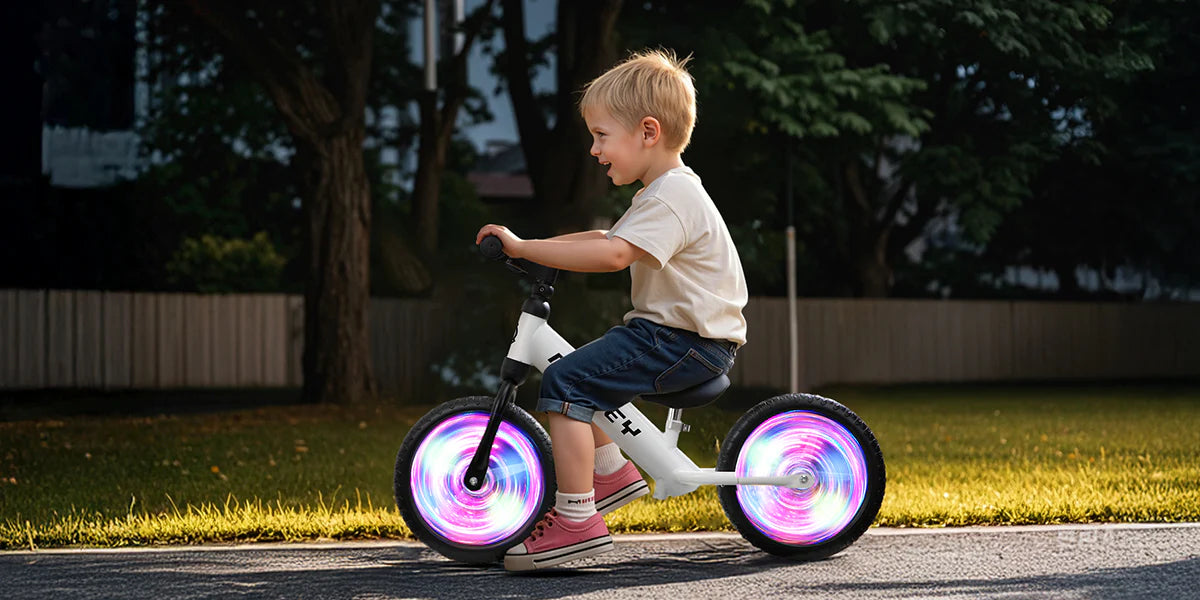
At 18 months, balance bikes function more as movement-learning tools than actual “bikes.”
2. Signs an 18-Month-Old Is Ready to Start
Walking Confidently—A child should already walk independently with reasonable stability.
Frequent falling while simply walking may indicate they still need more time.
Interest in Movement Toys—Toddlers who enjoy push toys, ride-ons, climbing, or pulling objects often show a natural readiness for balance-bike exploration.
Basic Coordination—Can your toddler squat, stand back up, or climb onto low furniture independently?These movements indicate developing balance control.
Ability to Follow Simple Directions—Simple instructions like “stop,” “sit,” or “hold on” become important during early riding experiences.
Emotional Curiosity—Confident toddlers often show excitement around movement and imitation.
If they seem interested when watching older children ride, they may be ready to try.
3. What Safety Factors Matter Most for Younger Toddlers?
For very young riders, safety matters far more than performance features.
A safe beginner setup should prioritize stability, comfort, and control.
Lightweight Design—Heavy bikes are difficult for toddlers to maneuver independently.
A lightweight frame allows children to stay in control and reduces frustration.
Low Seat Height—Toddlers should place both feet flat on the ground comfortably while seated.This helps them stop safely and maintain confidence.At 18 months, riding sessions should remain slow and exploratory.Avoid slopes, steep driveways, or crowded areas.
Proper Helmet Fit—The Consumer Product Safety Commission strongly recommends helmets for all wheeled ride-on toys.
A properly fitted helmet should:
Sit level on the head
Cover the forehead
Remain snug without shifting
Constant Supervision—Toddlers this young should never ride independently near streets, driveways, stairs, or uneven terrain. Adult supervision is essential at all times.

4. How to Choose the Right Balance Bike Size for an 18-Month-Old
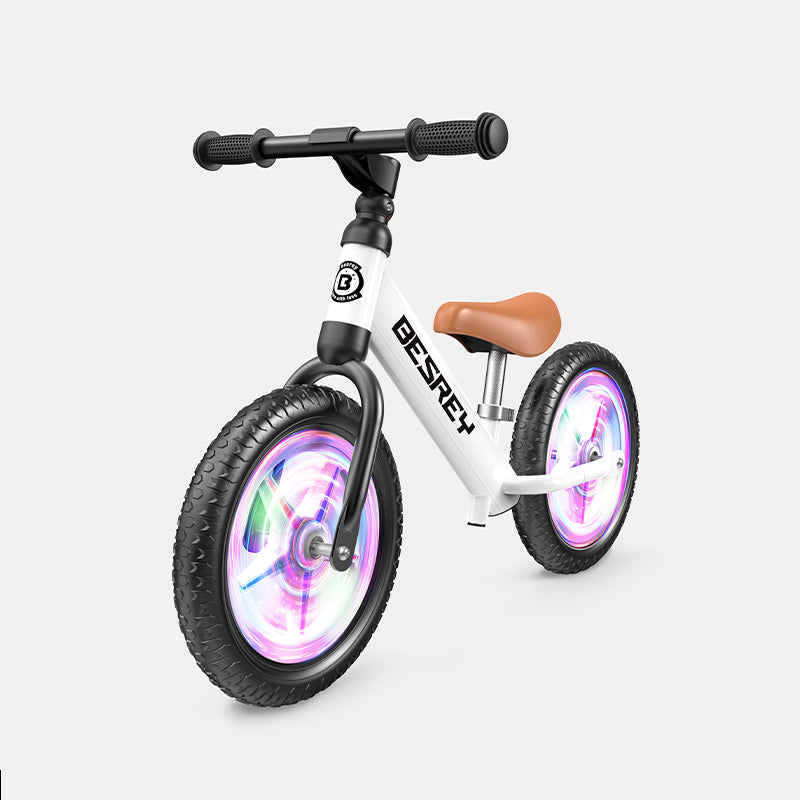
The best balance bike for a younger toddler is not necessarily the most advanced one. Proper fit matters most.
Step 1: Check the Inseam Measurement
Measure your child’s inseam while standing barefoot. The seat height should be approximately 1–2 inches lower than the inseam measurement so both feet rest securely on the floor.
Step 2: Prioritize Lightweight Frames
Many pediatric experts recommend choosing bikes under 7 pounds for very young riders whenever possible.⁵Heavy bikes can discourage independent use.
Look for:
Small wheels
Easy-grip handlebars
Limited turning radius
Stable geometry
Avoid unnecessary accessories that add weight or distraction. Adjustable Features Matter—Toddlers grow quickly. Adjustable seats and handlebars allow the bike to adapt as coordination improves.
5. When to Wait a Little Longer Before Starting
Sometimes waiting is the better choice. If a toddler shows fear, frustration, or physical instability, there is no harm in delaying balance bike introduction.
You may want to wait if your child:
Frequent trips while walking
Resists movement activities
Becomes frustrated easily
Struggles climbing onto ride-on toys
Shows little interest in independent mobility
Forcing riding too early can reduce confidence rather than build it.
The American Academy of Pediatrics emphasizes that child-led physical exploration supports healthier long-term confidence and motor skill development than pressure-based learning.

Conclusion:
So, is 18 months too early for a balance bike? For some toddlers, no.
With the right physical readiness, proper supervision, and a well-fitted bike, many 18-month-olds can begin safely exploring balance bike movement in simple, low-pressure ways.
The key is focusing less on age milestones and more on developmental signs, emotional confidence, and safe environments.
Understanding the true signs a toddler is ready for a balance bike helps parents choose experiences that build coordination gradually—without rushing the process.
The best balance bike is not the one with the most features. It is the one that helps a child feel safe, capable, and excited to move at their own pace.