
Besrey - Dec.27 2025
Which is more stable: a tricycle or a kid bike with removable training wheels?

Aparent's primary concern when buying a child's first bike is their child's stability. A stable ride helps children build confidence, reduces falls, and makes the experience of riding a bike more enjoyable than stressful. Two of the most popular options for beginners are tricycles and bicycles with removable training wheels. Both are designed to support new riders, as they serve different purposes.
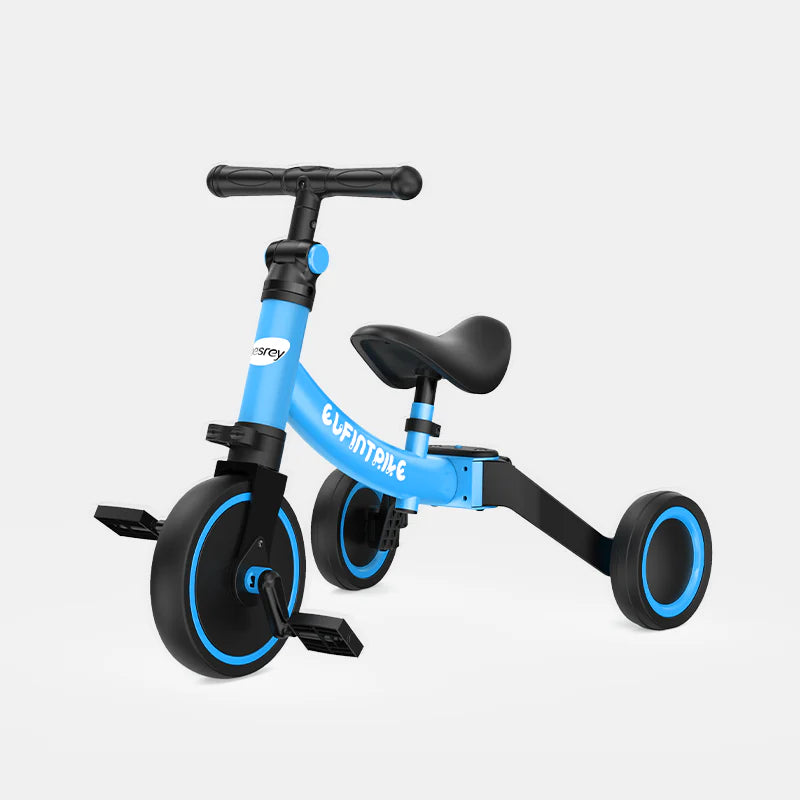
So we ask ourselves, which of the two is actually more stable? The answer depends on the design, the center of gravity, the environment where it will be used, and your child's developmental stage. Let's compare the stability of a traditional three-wheel tricycle and a kid bike with training wheels, using the 5‑in‑1 Toddler Tricycle as a modern example of how tricycles have evolved to support balance and safety.
Design and Center of Gravity
Design is the determining factor for achieving stability, specifically due to the number of wheels, the location of the wheels, and the center of gravity. But have you ever wondered about the center of gravity and how it depends on the bicycle's design? The center of gravity is the point where all the mass of the bike seems concentrated. Its position directly influences the handling, stability and overall performance of your kid’s bike.
Having clarified this point, we can highlight:
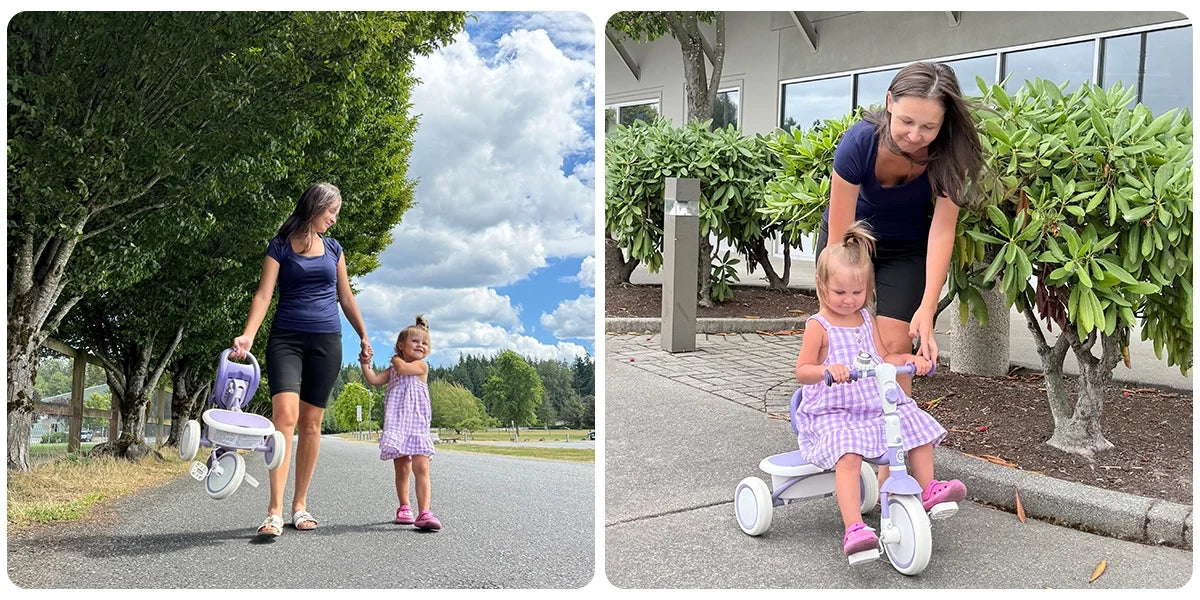
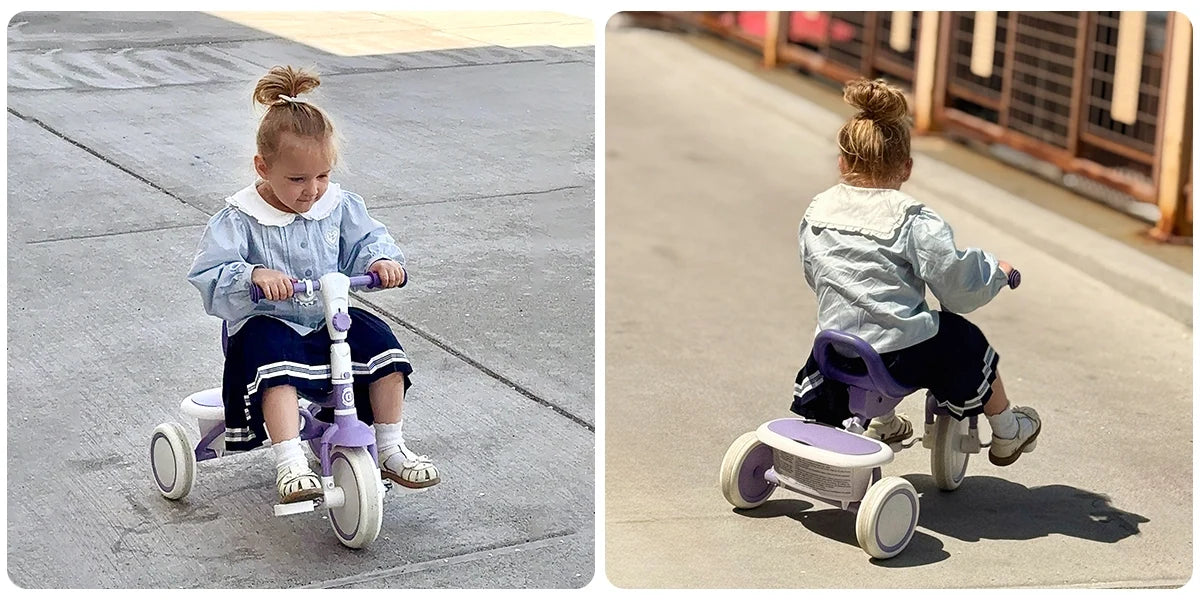
· Kid Tricycle: A kid tricycle, commonly referred to as a trike, features three wheels (one wheel in the front and two in the back) and provides stability and support for younger children who are still mastering balance and coordination. Because the seat is close to the ground, the rider's center of gravity remains low, reducing the chance of tipping over. Even when the toddler leans to one side or brakes suddenly, the tricycle remains horizontal.
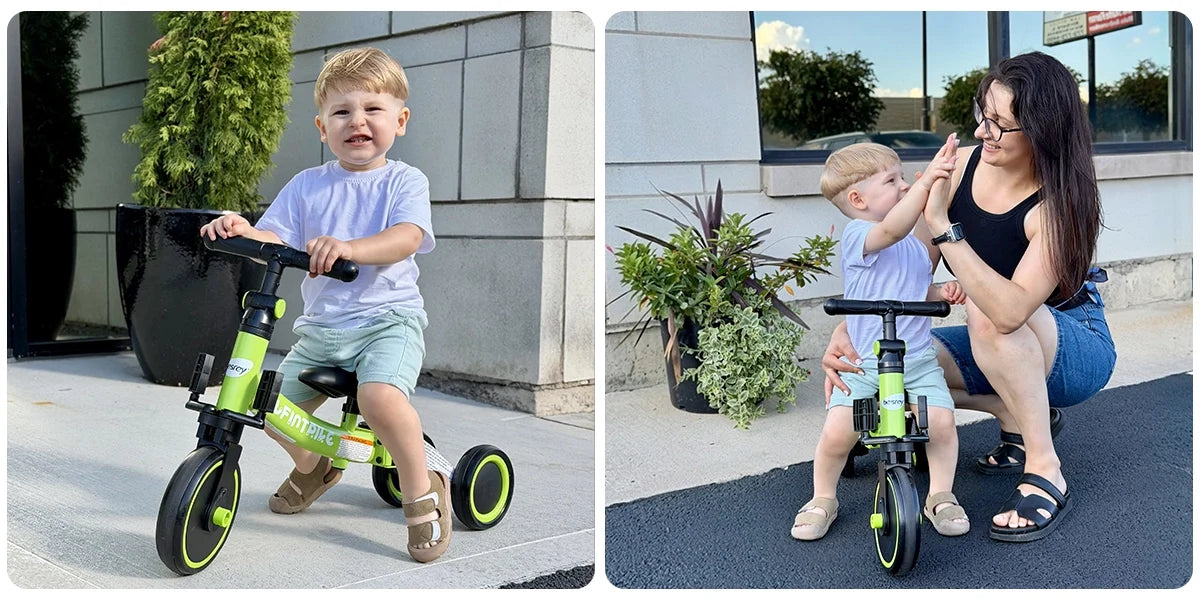
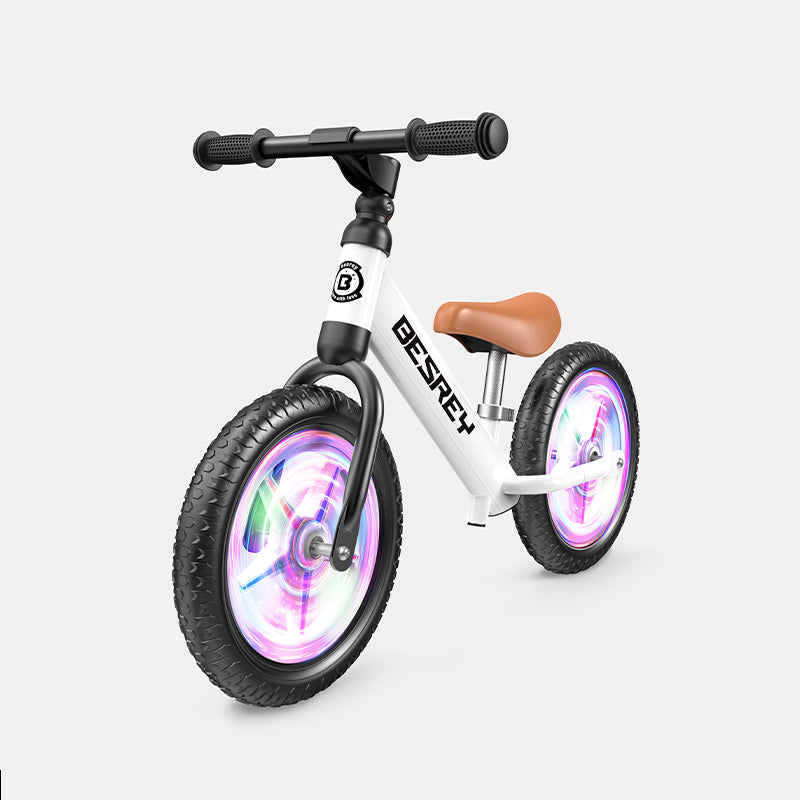
· Kid bike with removable training wheels: It consists of a two-wheeled bicycle with two small wheels added to the rear. The primary purpose of a balance bike is to teach children how to balance on two wheels. By propelling themselves forward using their feet and gliding, children learn to maintain equilibrium, an essential skill for transitioning to pedal bikes. Training wheels naturally create side support but are positioned slightly above the ground to promote balance.
In simple terms, tricycles are designed to be stable by default, while training-wheel bikes are designed to teach balance gradually.
Stability Pros and Cons of a Tricycle
Pros
· Superior static stability: A tricycle remains upright on its own without any support. Toddlers can sit down and stop suddenly without worrying about slipping or falling sideways. This makes tricycles suitable for children from 18 months old.
· Low center of gravity: Because tricycles are close to the ground, falls (if they happen) are less severe. This puts parents at ease and helps build confidence in their children.
· Confidence Builder: Tricycles are ideal for those who haven't yet developed their balance skills. The steering is simple, allowing children to focus on pedaling and steering without worrying about staying upright.
· Ideal for beginners: For toddlers who are just beginning to coordinate their ride, the tricycle allows them a safe and stable start in cycling.
Cons
· Limited turning stability at speed: Tricycles are safe at low speeds; if driven at high speed there is a risk that the front wheel will lift slightly or that the tricycle will tip over on its side.
· Doesn't Teach Balance: Because the tricycle does not require the development of balance, it may take children longer to learn to ride with only two wheels.
· Bulky & Heavy: Their rear axle makes tricycles difficult to maneuver in tight spaces compared to a bicycle. Their design also makes them difficult to store.
Modern options like a 5‑in‑1 Toddler Tricycle help address some of these issues by offering multiple riding modes that evolve with your child, gradually encouraging balance and coordination.
Stability Pros and Cons of a Training-Wheel Bike
Pros
· Teaches Pedaling: Training wheels provide support as children begin to experience the feel of a real bicycle. This bridges the gap between assisted riding and independent balance, allowing the child to focus on the mechanics of pedaling without worrying about falling.
· Builds Confidence (Initially): Because training wheels aren't always in contact with the ground, children begin to learn how weight affects stability. This helps them build self-confidence and fosters balance awareness.
· Gradual Progression and longer-term usability: The training wheels can be raised or adjusted to gradually assist in learning balance. Once the training wheels are removed, the same bicycle can be used, making it a long-term investment.
Cons
· False Sense of Balance: Training wheels can lift off the ground on uneven surfaces, causing the bike to wobble and potentially leading to a fall for the child.
· Higher center of gravity: Compared to tricycles, bicycles with training wheels are naturally a bit taller, making them less safe for toddlers.
· Harder Transition: Kids often struggle to adapt and may need to "unlearn" bad habits once training wheels are removed, since the bike behaves very differently without them.
Safety Considerations (Common to Both)
Whichever option you choose, safety should be your number one priority. We recommend:
· Helmet use: The child should always wear a properly fitting helmet.
· Parental Role: Toddlers should always be supervised, especially if they are outside the home.
· Where to Ride: Smooth, flat surfaces will help with stability, whether for tricycles or training-wheel bikes.
· Proper fit: A bike that is too big or too small reduces the chance of control and stability.
· General & Maintenance Tips: regularly check tires, brakes, and handlebars, stick to smooth surfaces, avoiding gravel or broken paths and teach them to make eye contact with drivers and stay constantly alert.
Choosing a product designed specifically for toddlers, such as a 5‑in‑1 Toddler Tricycle, can enhance safety by offering age-appropriate ergonomics and adaptable features.
Conclusion
When it comes to comparing stability, a tricycle is more stable than a kid bike with removable training wheels, especially for young children just starting to ride. Its three-wheeled design, low center of gravity, and ability to stand upright make it the safest option for early ages.
However, a bicycle with training wheels plays a very important role in a child's growth, as it prepares them to practice balance and gradually master the use of a two-wheeled bicycle.
For parents looking for the best of both worlds, a multi-stage option like a 5‑in‑1 Toddler Tricycle offers excellent early stability while supporting a smooth transition toward independent riding. Ultimately, the most stable choice is the one that matches your child’s age, coordination level, and riding environment—helping them ride carefully, confidently, and cheerfully.
Article credit:
https://medium.com/@theridingkid/which-is-more-stable-a-tricycle-or-bike-with-training-wheels-69be8f5a165
https://stmotosport.ca/en/blogs/blogmotosport/le-centre-de-gravite-le-coeur-de-lequilibre-moto?srsltid=AfmBOor54ZPn_a6Bv_wKWYyorz5Rz_-jURuiUwDf6vH6t1Lrxu_Dlez0
https://bentleytrike.com/blogs/blog/exploring-the-difference-kid-balance-bicycle-vs-kid-tricycle?srsltid=AfmBOoqtHm_YtQRei5KkakbZWUYBv-8FHizuY6n7KKPqXzAOMPGZtJxL
https://www.littlebigbikes.com/blogs/guides-and-stories/balance-bike-vs-trike-which-is-best-for-kids?srsltid=AfmBOor3yMHbsN2xjUQxy2Py-MD5ACYuZS-_bTfB9G3fAuPpxhJDDAhe
https://www.healthychildren.org/English/safety-prevention/at-play/Pages/your-childs-first-tricycle-or-bike-teaching-them-to-ride-safely.aspx#:~:text=Page%20Content,all%20intersections%2C%20marked%20and%20unmarked